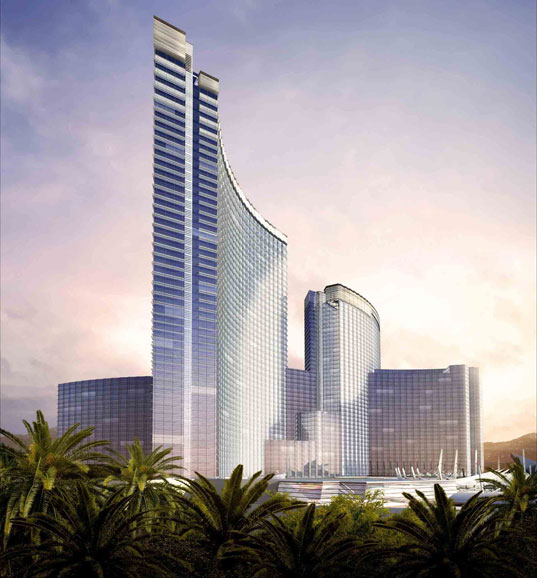
Las Vegas is taking the lead in green development by planning the largest privately financed development in the history of North America vying for the USGBC’s LEED certification. At 18 million square feet, the new sustainable spot on the strip called CityCenter boasts a square footage that is bigger than all current LEED certified buildings combined. Currently under construction between the Bellagio and Monte Carlo resorts, the center’s first building, Aria, is scheduled to open at the end of 2009. An $8 billion venture between MGM MIRAGE and Dubai World, CityCenter is bringing sustainability to the forefront, rightfully earning the tag of one of the world’s largest environmentally sustainable urban communities.
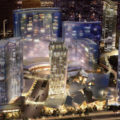
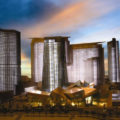

The sustainable buzz around CityCenter starts with the team. At the core of the design are some of our favorite green-minded architects including Pelli Clarke Pelli, Foster + Partners, and Rafael Vinoly. The developers have also employed hundreds of sustainability consultants to bring a whole systems approach to the project, and the tradesmen carrying out construction are educated in green building practice. MGM MIRAGE has trained over 10,000 construction trade and craftsmen on green building techniques that are already being forged into the site.
CityCenter is making some pretty big efforts to tout itself as a model of sustainability. Green building practices like recycling construction waste, using eco-friendly materials, boosting natural lighting, and incorporating an onsite co-generation power plant are just a few of the ways that the project is earning its eco-credentials. Materials from the imploded Boardwalk Hotel (cleared for the site of CityCenter) are being recycled into the project, crushed to be recycled into material going into the project, and bathroom fixtures are being shipped to other countries wrapped in the old drapes and carpeting from the original hotel to be used again.

Additional efforts were undertaken to improve even the smallest details. Unhappy with the current designs of low flow water fixtures, MGM MIRAGE used their purchasing power to design custom low-flow features to high design standards. The sustainable step will save an estimated 76 million gallons of water daily when CityCenter is completed and occupied.
The finished CityCenter will include a resort casino, two non-gaming resort hotels, a 500,000 square foot retail and entertainment district and will also feature a $40 million public fine art program.
+ CityCenter