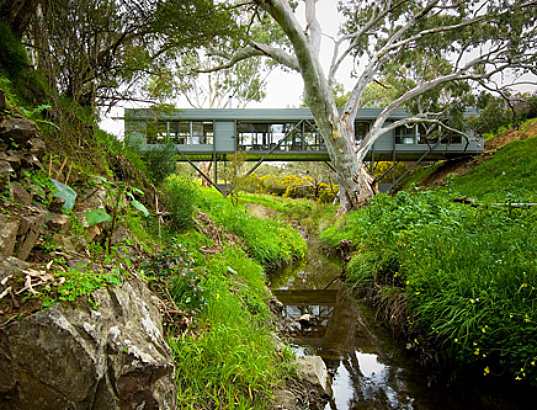
Located on a site with some bumpy topography, the Bridge House floats on steel trusses that literally bridge the gap between two sloping hillsides. The owners of this home saw opportunity when they discovered a creek running through their lot and rather than build somewhere else, they wanted to take advantage of the views offered by a location near the creek bed. The finished home, which resides about an hour outside of Adelaide, Australia, not only retains the surrounding environment’s rustic charm, but is sustainably built, makes use of many local materials and relies on the sun for its heating needs.
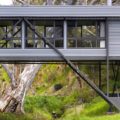
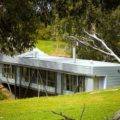
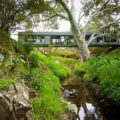
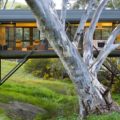

The budget for this 1 bedroom and office house was modest – approximately A$220,000 or US$175,000, and included many prefab elements like the steel trusses and the steel decking, concrete floor and rigid insulation. Due to the fact that the house spans the creek, additional insulation needed to be included in the floor which is exposed to the surrounding air.
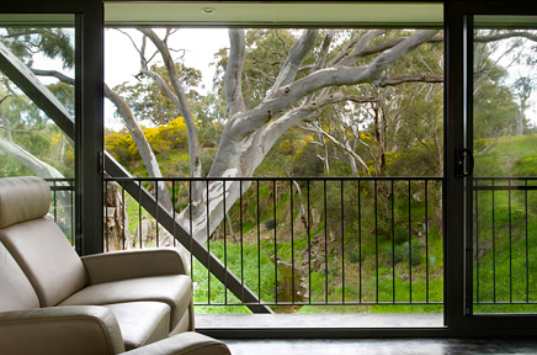
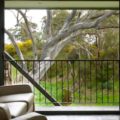
The house is glazed on both the north and south side of the home for both excellent views as well as passive solar heating. During the winter, the sun from the north radiates in through the windows and heats the concrete floor. A small wood heater provides any additional heat needed. In the summer, pressed steel screens cover the windows to keep the sun out, while natural cross ventilation and fans keep the interior cool.

Wherever possible, eco-friendly materials were used for construction. The architect, Max Pritchard, chose materials that were produced locally, easily recyclable or reusable, easily installed with little machinery, or created little waste. Steel and aluminum are used extensively throughout the home and can be recycled at the end of the home’s life. Secondary framing came from plantation pine grown in the same state.
Additional features of the house include a rainwater collection system on the roof and a solar thermal system to provide hot water to the house. Nearby a small shed sits that holds a photovoltaic system, which provides power to the home. And to minimize contamination of the creek below, waste water is pumped 100 meters away where it is treated and then dispersed underground.
+ Max Pritchard Architect
via Archinect