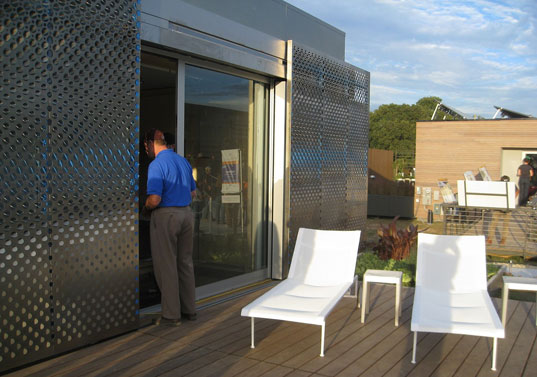
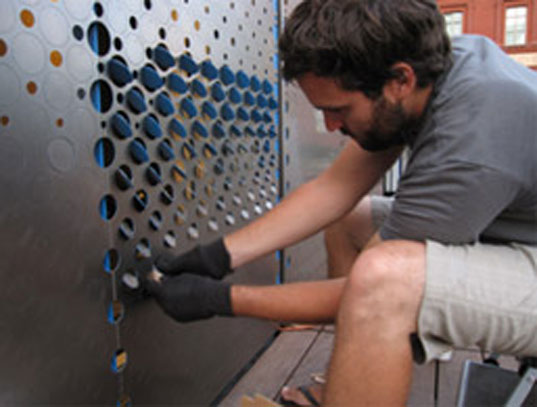
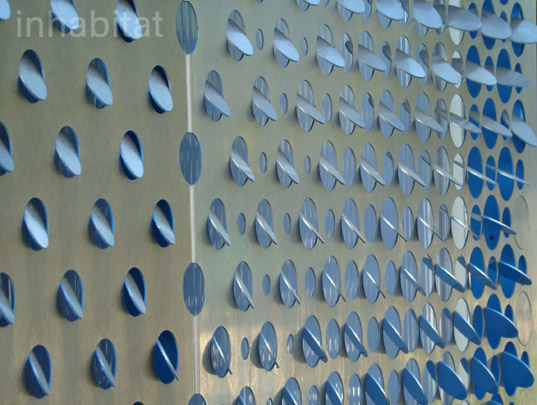
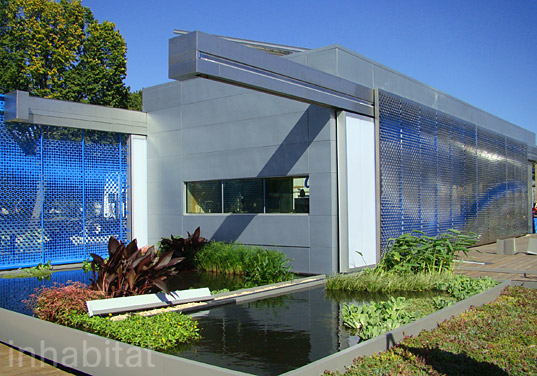
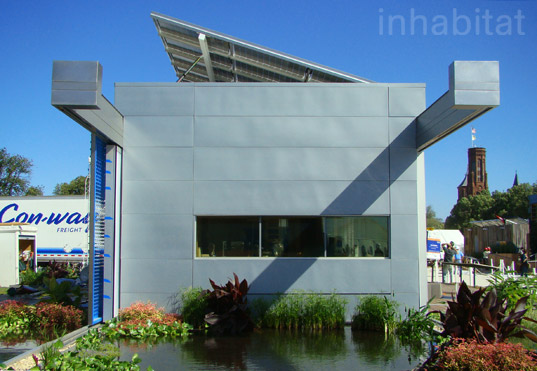
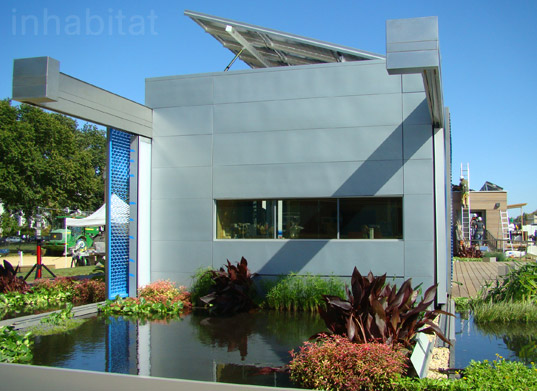
The 2009 Solar Decathlon may have come to a close, but we wanted to shine a little more light on one of our favorite projects, Virginia Tech’s LUMENHAUS. Ranked 4th in this year’s Architecture category, the LUMENHAUS is named for its “power of light” attributes and architectural references to the BauHaus movement, and was particularly inspired by Mies Van Der Rohe’s Farnsworth House. Like its historic reference, it is comprised of all glass walls, maximizing exposure to natural daylight. The house features an automated “Eclipse System” of highly insulated translucent panels that filters the light using independent sliding layers, creating an ever-changing pattern throughout the day.


As described in Virginia Tech’s especially high-tech animated presentation, the LUMENHAUS manifests a “whole building design” construction approach comprised of five categories representing the team’s top priorities for someone living in the home. The first category for SMART living demonstrates optimized home systems that automatically adjust to weather and can be monitored in real time by a weather station on the house itself. The house power consumption can be closely monitored on the central entertainment screen, showing how much energy is produced, where and how much is consumed, and how much is given back to the power grid at any given time.

The second category for RESPONSIVE Living indicates the home’s ability to feed live updates of all the house systems and synchronize them to adapt and run most efficiently. The third category for GREEN Living is about “inviting the elements in” through lighting and venting, most notably with a rain catchment system designed to purify rainwater for potable use. Grey water from the shower is also is directed through a series of biofilter ponds adjacent to the house, which recycle water for nonpotable use. As for green heating, a geo-thermal heat pump radiates heat through the concrete floor and is prompted by the home’s ‘smart systems’.
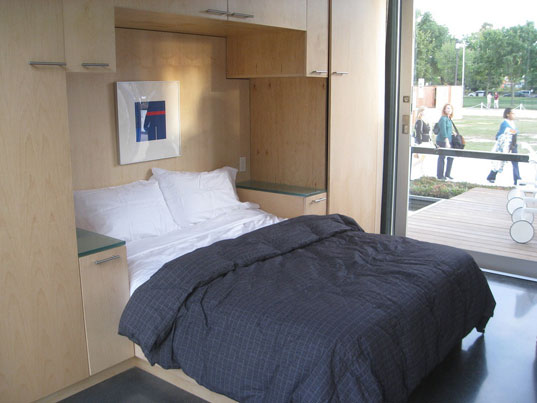
The final two categories, for COMFORTABLE and PAVILION Living, combine high-tech and low-tech through intuitive design features that can be monitored and adjusted via Smartphone technology. The free-flowing floor plan, also a BauHaus feature, is designed to be flexible and focused around a central bathroom core, and the modular components of the house are easily scaled up, as multiple units can connect. But as a single unit, at just 800 square feet, the open plan and sliding walls provide spacious living with maximum flexibility.
+ Lumenhaus
+ 2009 Solar Decathlon Coverage
Photos by Jill Fehrenbacher