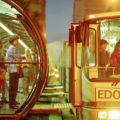
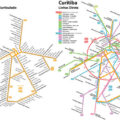
While we didn’t include it on our top 5 public transportation cities list, Curitiba is definitely a case study in innovative and sustainable mass transit. Despite the small size of the city in Brazil, Curitiba has a well-planned, easily-navigable, efficient, and environmentally-responsible transportation system that big cities worldwide have since been trying to mimic. We like to talk about great green cars for Transportation Tuesday, but what’s greener than a well-designed mass transit system used by 85% of the city’s population?
Related Posts
-
While public transportation is a great green urban option, the “last mile” problem is a real shortcoming- referring to the conundrum of the extra distance
-
So far at transportation Tuesdays, we’ve brought you the Top 5 Greenest Sports Cars and the Top 6 Sexiest Bicycles. Now, in the spirit of
-
Traveling to work in an old airplane shell powered by renewable energy sound little bonkers to you? Ben Missler from Mass Tram America thinks not,
12 Responses to “TRANSPORTATION TUESDAY: Curitiba Public Transit”
-
Featured Author
-
Read Inhabitat
-
Search Categories
-
Recent Posts
-
Recent Comments
-
Browse by Keyword
follow inhabitat on:
popular today
all time
most commented
more popular stories >
© Inhabitat.com 2012 | About Inhabitat | Contact Us | Advertising with Inhabitat | Terms Of Use | Privacy Policy | Inhabitat, LLC


I live in Curitiba, and I can say that no other city have such a great transit system
…and I live and love this city!
I had the great pleasure of visiting this city in the early 90′s and meeting its remarkable mayor. I was floored by the newly inaugurated transportation system, but just as amazed by their garbage collection system that provides income to the poor.
More on Curitiba’s garbage collection program:
“Curitiba also shows that cities that generate over one million tons of solid waste annually do not necessarily require expensive mechanical garbage separation facilities.
Waste management was considered a key element in the improved quality of life. Curitibanos now recycle two-thirds of their garbage, in a program that costs no more than the old landfill. But the city is cleaner, its people have more jobs, farmers have more dependable income, and the poor receive food and transportation benefits.
The “Garbage that is not Garbage” and “Garbage Purchase” programs involve curbside pick-up and disposal of recyclables sorted by households and in less accessible areas, exchange of collected garbage for food or transit tickets by low-income residents. The “All Clean” program temporarily hires retired or unemployed persons who concentrate on areas where litter has accumulated.
Trash is separated into only two categories, organic and inorganic, picked up in two different types of trucks. Poor residents in areas unreachable by truck bring their waste to neighborhood centers, where they exchange it for bus tickets or eggs, and milk bought from outlying farms. Trash is separated at a plant built of recycled materials, sorted by workers who are handicapped, recent immigrants and alcoholics. Recovered materials are sold to local industries. Styrofoam is shredded and used for stuffing for quilts.
Since its 1989 start-up, the recyclable waste program has separated 419,000 tons – enough to fill 1,200 twenty-story buildings. Inorganic waste (plastic, glass, paper, aluminum) totals 13% of garbage collected.
Curitiba’s selective garbage collection system now extends to twenty-four surrounding municipalities.”
This looks like a great system, and I really like the modern look of the passenger wait stations.
Unfortunately, the problem I see is that, in already-built-up cities, the necessary changes to existing roads and road use make it almost impossible to implement — specifically “… a system in which two roads exclusively for public transport are surrounded by the standard one-way street for private transport.”
That being said, it obviously would be to our benefit if public transit became THE method of commuting and general movement in and around cities.
Cheers
J.
OH PLEASE…send this to Toronto! Our system, like most on this continent , seems as though it was designed by architects who hate people and, (as is entirely predictable) is continually in the red and its ridership ‘votes” with the alternate automobile ( at enormous extra costs everywhere else on the big picture balance sheet).
KUDOS..Curitiba!
There is a great New York Times article from mid 2007 about the history and development of Curitiba’s transit system. it also discusses some of the problems the city is facing with growth and income inequality.
this transport system has already been adopted by Jakarta (fyi, the capitol of Indonesia with its 10 million citizens). Trans-Jakarta commuting system is a BAD copy of the one in Curitiba. Maybe because the implementation is a little bit too late, I think, for a city with the vehicle growth of already over than 1000 units/ day.. It’d be awesome if 85% percent of Jakarta citizen would ride on the buses..
i live in bogota.
and transmilenio has been a huge success. it costed a fraction a of whata metro costs and even tough bogota its a long way from solving its tranportation process. the revolution has begun.
I have been to Curitiba and have had the pleasure of using the bus network system. I would like to be as proud of my city, Brisbane – Australia, as the two Curitibans who posted their comments on December 11th.
Unfortunately the leadership of our city is in the hands of an impotent bunch of councillors headed up by a narcissist Lord Mayor (who is an engineer). The Lord Mayor has created a road network building boom. He has commissioned tunnels and given the go ahead to build an expensive toll bridge within 250m of an existing bridge. Both bridges will pump traffic into the same thoroughfare on the southern side of the bridge.
A feasibility study for the bridge was undertaken by an engineering company who provided a report to our Council. This report shows that overall, building the bridge increases congestion! Despite being on notice as to these figures and despite significant public outcry against the bridge the bridge is to be built.
What city has ever paved its way out of traffic congestion?
Meanwhile, many of the citizens of my city must drive their cars into and around the city as the public transport system is manifestly inadequate.
Curitiba’s story is inspiring and gives me hope that, with the right leadership, cities can be built to serve the best interests of their people and the environment.
[...] Picture is of a bus stop in Curtiba, Brazil. A city that has the mass transit thing figured out. SHARETHIS.addEntry({ title: “The Impact of Public Transit on Climate Change and America’s Energy Usage”, url: “http://www.groovygreen.com/groove/?p=2893″ }); [...]
i think Curtiba Station, is good because the design is protected commuters from the dust, vehicles smokes and most important is from the weather condition.