


Start Slideshow


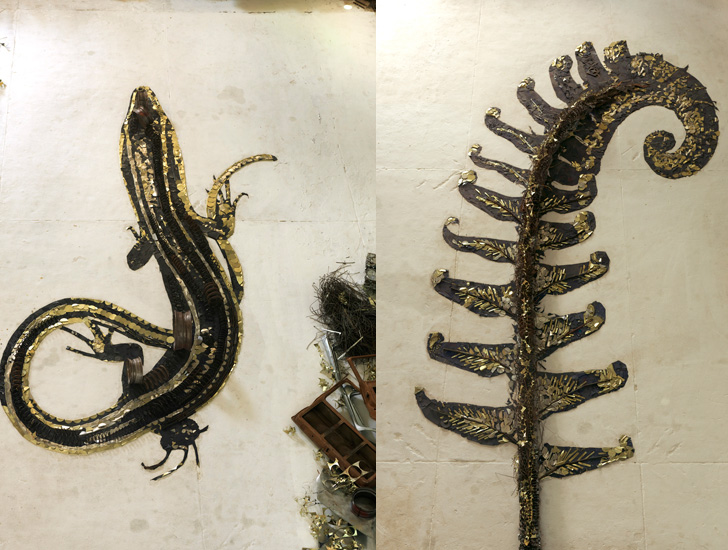
 Vik Muniz Scrap Metal<a href="http://vikmuniz.net/" target="_blank">Vik Muniz</a>’ latest series of <a href="http://inhabitat.com/vik-muniz-creates-giant-portraits-using-garbage-from-rio-de-janeiro’s-landfills/" target="_blank">large scale trompe l’oeil pieces</a> are made from glittering scrap metal. For his new works, the Brazilian artist has transformed car doors, bed springs, sheet metal, rivets and gears into gorgeous animals. Photographs of the <a href="http://inhabitat.com/marta-klonowska-assembles-shards-of-glass-into-delicate-sculptures-of-animals/" target="_blank">sparkly conglomerations</a> will be shown next week at the Armory Show in New York.1
 Vik Muniz Scrap MetalUsing scrap metal industry waste as his medium, Muniz carefully creates oversized photorealistic collages.2
 Vik Muniz Scrap MetalTreating each <a href="http://inhabitat.com/bernard-pras-recreates-masterpieces-entirely-from-recycled-materials/" target="_blank">piece of salvage</a> as if it were a precious metal, the waste is transformed into glitz, making up underwater scenes, birds in flight, and other flora and fauna.3
 Vik Muniz Scrap MetalAfter the elaborate installations are assembled, Muniz then takes photographs, presenting the prints as the final works of art.4
 Vik Muniz Scrap MetalMuniz’ incredible collages aren’t just a <a href="http://inhabitat.com/barbara-franc-transforms-recycled-objects-into-amazing-animal-sculptures/" target="_blank">feat of recycled materials</a>, but also of scale.5
 Vik Muniz SeahorseIn one piece, the artist renders a golden sea horse from metal bits and sheets. The viewer at first associates the sea horse with the tiny and delicate size of the animal in life. But upon closer inspection, we see the coral reef that the sea horse floats near is actually made up of old car doors- totally throwing the sense of perspective for a loop!6
 Vik Muniz Scrap MetalSmall clues such as recognizable items like car doors or paint cans play with the viewer’s perception of perspective. With the recognition of an everyday object, Muniz also reminds us that the materials he uses are otherwise considered garbage. The pieces join Muniz’ long time practice of creating large scale installations from garbage, which is excellently portrayed <a href="http://inhabitat.com/environmental-documentaries-bring-a-green-theme-to-2011-academy-awards/" target="_blank">in the documentary “WASTELAND</a>.”7


