


Start Slideshow


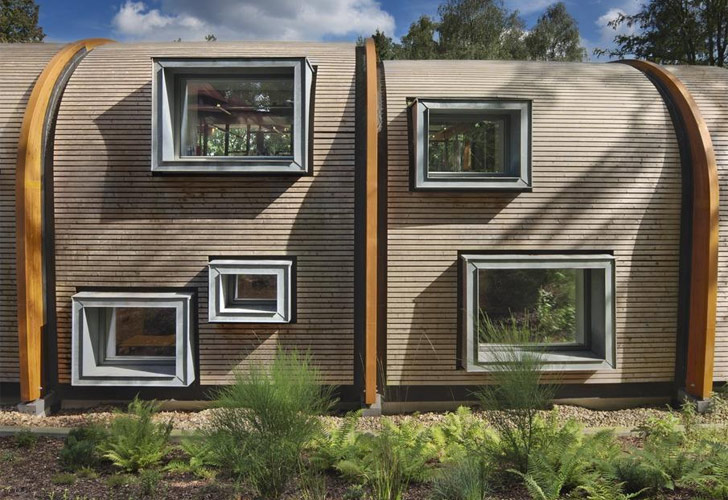

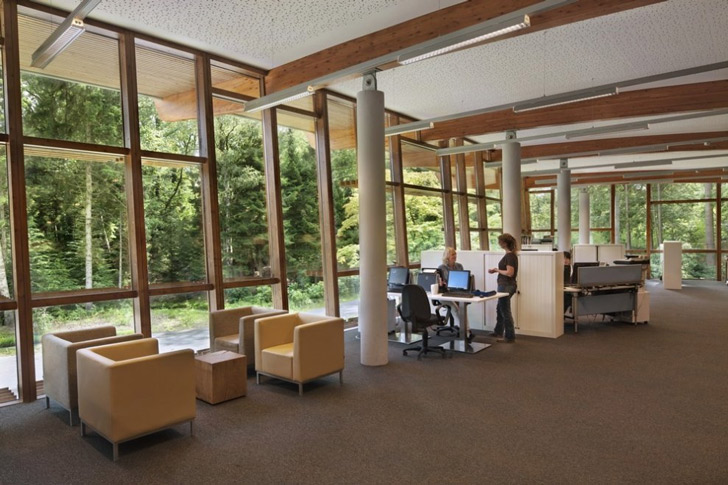


 De St@art (The T@il) by RAU<a href="http://rau.eu/en/2009/11/destaart/">RAU Architecture</a>'s De St@art (The T@il) is a mixed-use visitors' center for the primate center at the <a href="http://www.apenheul.com/">Apenheul Foundation</a>. Located in the “wilds” of Apeldoorn, in the Netherlands, this ambitious and environmentally savvy design acts as a bridge from the center’s main facilities to the park. Immediately distinguishing itself by a<a href="http://inhabitat.com/green-roofed-serpentine-swiss-lake-resort-has-see-through-skin/"> serpentine shape</a> that meanders along a new foot path to the primate enclaves, the structure is ribbed with huge, arching larch beams and clad in a floor-to-ceiling glass skin. Intelligence also goes with beauty in this design, as the building is exceptionally energy efficient and will soon be clad in solar electric panels to help meet the goal of <a href="http://inhabitat.com/the-houl-a-sleek-net-zero-carbon-long-house-in-scotland/">net zero carbon</a>.1
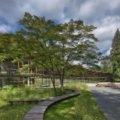 De St@art (The T@il) by RAUApenheul is a unique open-air <a href="http://inhabitat.com/nyc/lego-animals-invade-the-bronx-zoo/">zoo</a> for primates that rests in a heavily forested area east of Amsterdam. The De St@art (The T@il) was designed for the zoo as a multi-use facility to house a visitors' center, underground auditorium, offices and an animal treatment center.2
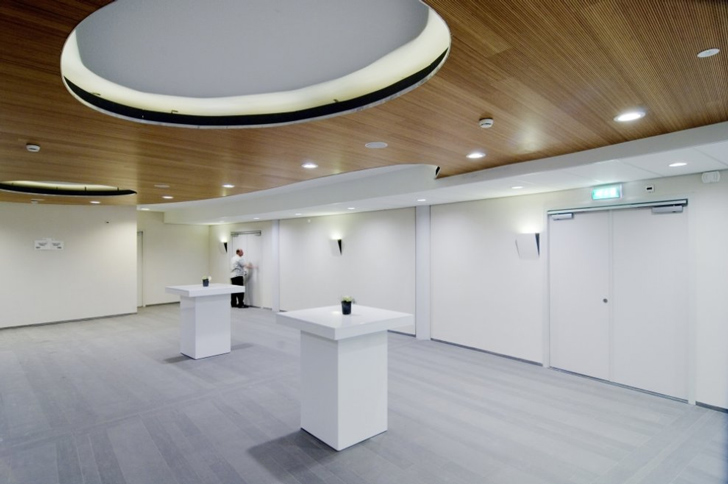
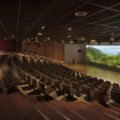
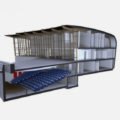 De St@art (The T@il) by RAUThe winding building is actually much larger than it appears, as the 300 seat auditorium is<a href="http://inhabitat.com/mexicos-subterranean-childrens-museum-is-an-interactive-and-educational-immersion/"> tucked below ground</a> to minimize the bulk of the structure.3
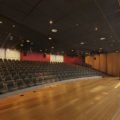 De St@art (The T@il) by RAUThe underground space is still well daylit thanks to a bank of skylights that double as a frame for the outdoor pavilion.4
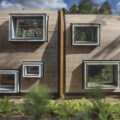
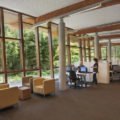
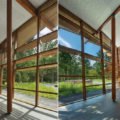 De St@art (The T@il) by RAU<a href="http://inhabitat.com/?cat=77">Daylight</a> is a major theme as most of the southern face is glazed floor to ceiling, and the north side is studded in very interesting pop-out windows.5
 De St@art (The T@il) by RAUActing like a ribcage, the basic structure is made from local larch glulam beams that arch across the building.6
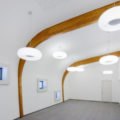 De St@art (The T@il) by RAUAll wood is either FSC or PEFC certified (a mixed bag, environmental speaking, as<a href="http://www.greenpeace.org/international/en/news/Blogs/makingwaves/green-forestry-labels-pefc-sfi-called-into-qu/blog/37371/"> PEFC has a very spotty record</a> on tracking and enforcing best forestry practices).7
 De St@art (The T@il) by RAUThe facility is heated and cooled with an efficient<a href="http://en.wikipedia.org/wiki/Geothermal_heat_pump#Ground_heat_exchanger"> ground source heat pump</a>.8
 De St@art (The T@il) by RAUImpressively the facility uses <a href="http://inhabitat.com/gorgeous-dutch-eco-office-is-green-outside-and-in/">concrete core activation</a> to chill or heat the floor, which further saves energy.9
 De St@art (The T@il) by RAUUsing motion active LED lighting, and a soon to be installed solar electric array, the center is slated to become carbon neutral.10
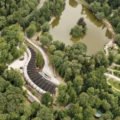 De St@art (The T@il) by RAUAn aerial view.11
