


Start Slideshow


 Hong Seong Jang "Type City"From afar, <a href="http://www.hongseonjang.com" target="_blank">Hong Seon Jang</a>’s sculptural cityscapes look like models from a city planner’s office. But upon closer inspection, we can see that each <a href="http://inhabitat.com/liu-weis-chaotic-cities-are-made-of-stacks-upon-stacks-of-recycled-text-books/" target="_blank">rising building and skyscraper</a> is capped with a letter of the alphabet! The mini metropolises are in fact meticulously arranged conglomerations of disused typesets.1
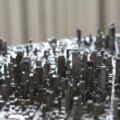 Hong Seong Jang "Type City"Jang’s piece is part of a solo show of the artist’s work at <a href="http://www.davidbsmithgallery.com" target="_blank">David B. Smith Gallery</a> in Denver, Colorado.2
 Hong Seong Jang "Type City"The letterpress and wood sculpture stretches just two feet by 11 inches, but rises to 14 inches. Despite the small volume, a massive amount of tiny <a href="http://inhabitat.com/anish-kapoors-recycled-steel-arcelormittal-orbit-tower-now-complete-in-london/" target="_blank">disused metal pieces</a> were used to build up the incredible relief.3
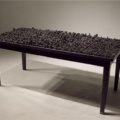 Hong Seong Jang "Type City"“Type City” is a <a href="http://inhabitat.com/18000-lb-mayan-temple-is-the-worlds-largest-chocolate-sculpture/" target="_blank">birds-eye view</a> of a city by the sea.4
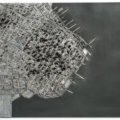 Hong Seong Jang "Type City"Jang has used the letterpress pieces to create the city’s shoreline, complete with long docks that jut into the water.5
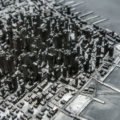 Hong Seong Jang "Type City"Grids of streets and low apartment buildings and business are made from small pieces, or longer ones places horizontally. <a href="http://inhabitat.com/nyc/japanese-artist-carves-two-ton-marble-map-of-manhattan/" target="_blank">Clusters of skyscrapers</a> spring up in the “downtown” area near the water’s edge, with longer pieces held in place vertically, the raised letters on their roofs giving away their former uses.6
 Hong Seong Jang "Type City"The incredible details of Type City harkens the era of <a href="http://inhabitat.com/miniaturist-jason-daquino-creates-tiny-portraits-on-recycled-matchbooks/" target="_blank">miniaturists</a>, which coincidentally are related to the era when letterpresses were commonly used to print <a href="http://inhabitat.com/artist-will-kurtz-sculpts-lifelike-people-out-of-recycled-newspapers/" target="_blank">newspapers, books and other reading material</a>s. Jang ironically uses the remnants from an obsolete vintage process to create the sprawling metropolis of modern times.7


