


Start Slideshow


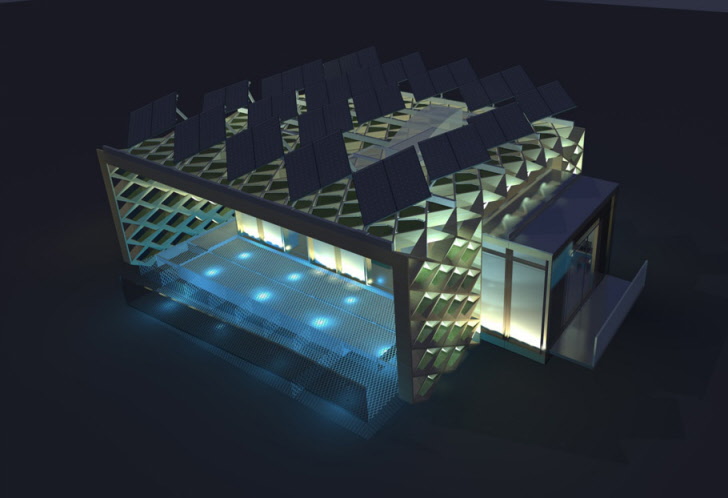
 Tonji University's Para Eco-HouseChina's<a href="http://www.tongji.edu.cn/english/" target="_blank"> Tongji University</a> architectural students have drawn inspiration from <a href="http://en.wikipedia.org/wiki/Taoism" target="_blank">Daoist principles</a> of passive and active forces with <a href="http://solardecathlon2012.tongji.edu.cn/detail.aspx?id=19" target="_blank">Para Eco-House</a>, their entry into the <a href="http://inhabitat.com/tag/solar-decathlon-europe/">2012 European Solar Decathlon</a>, while also incorporating the Western philosophies of independence and autonomy. Responding to questions of energy efficiency, they installed a <a href="http://en.wikipedia.org/wiki/Photovoltaic_thermal_hybrid_solar_collector" target="_blank">Photovoltaic-Thermal</a>, but they also used Passivhaus strategies in order to minimize energy use. The resulting house is increasingly self sufficient and can function largely off-grid, and it also fits in with a more Western view of individuality. That's pretty deep for a house!1
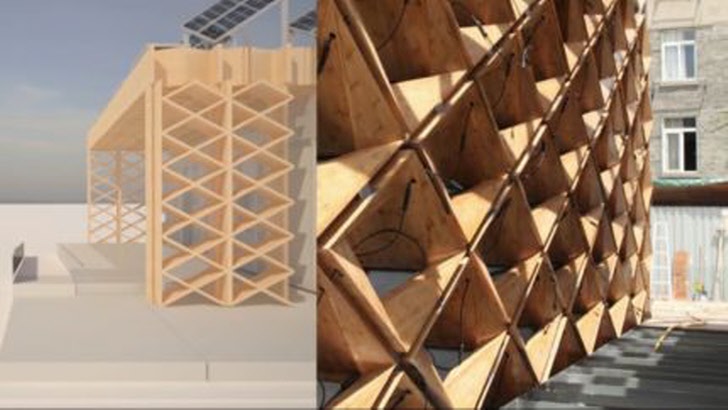
 Tonji University's Para Eco-HouseThe lattice-work outer shell is created from bamboo, a traditional Chinese material that is more sustainable than timber due to its rapid regrowth. In this form of using mortise and tendon joints it adds to the structures strength while maintaining a less harsh outward appearance. The roof has added vegetation which aids in both insulating the house, cooling the solar panels and potentially for planting food. They intend to place 42 solar panels on the roof, 2 sets of 14 are oriented in a set direction on different sides of the building, and the final set of 14 panels use a Tongji University designed tracking system to follow the sun throughout the day in order to maximise solar exposure.2
 Tonji University's Para Eco-HouseThe design also incorporates a rain-water harvesting system, allowing run-off to be filtered through a strategically placed reed bed outside the house and collected in an underground water tank. Except drinking, this collected water could be used for any household use (showers / clothes and dish washing / watering the plants). Allied with the solar panels creating a surplus of electricity based on predicted family usage, the house hugely reduces dependance on utility companies.3
 Tonji University's Para Eco-HouseLED lighting is considered an important part of the house in terms of energy efficiency and thus the longevity of the design. The outer facade is elegantly lit-up at night, and the porch area emits a welcoming blue glow from beneath the house ensuring a different experience for residents during the night-time.4
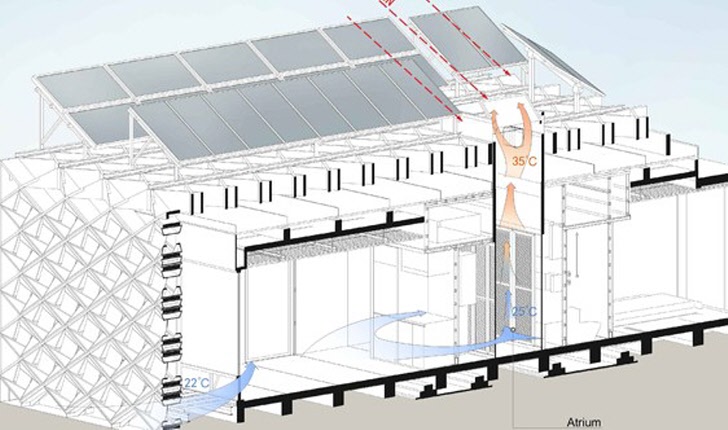
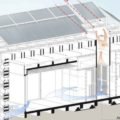 Tonji University's Para Eco-HouseThe inner sanctum of the house that is enclosed by the bamboo structure has been built incorporating modern thermal insulation materials combined with scraps of old newspaper to maintain warmth in the winter. All windows are triple glazed to aid in minimising heatloss, thus reducing energy requirements. In the warmer weather, strategic ventilation shafts in the walls, the roof and underneath this structure allows breeze to flow throughout the inner building when required, creating a natural air-conditioning system for the living area with the hot air being pushed out through the roof.5
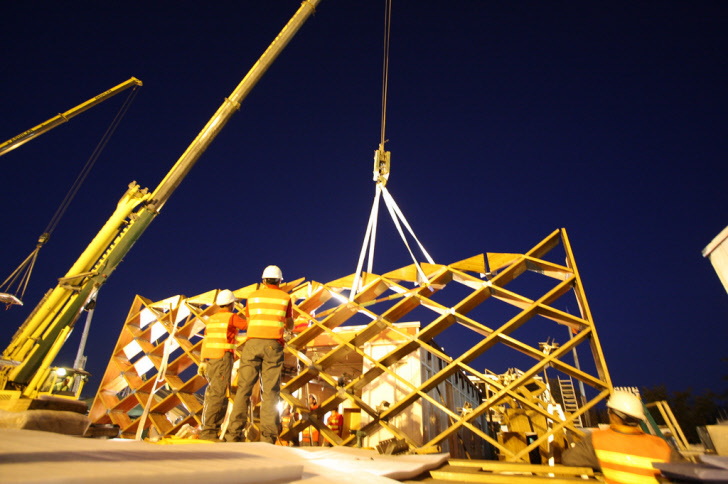
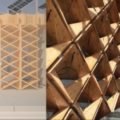 Tonji University's Para Eco-HouseAs is becoming common practice for SD Europe entrants due to the constraints on construction time (a fortnight maximum), the team has embraced prefabrication methods, whereby much of the house is completed in a factory prior to arrival onsite, thus minimising time and effort in the final building process.6
 Tonji University's Para Eco-HouseThe Chinese team are currently onsite in Madrid, and construction is under way at the Villa Solar site. The doors will open to the public on the 14th September.7


