


Start Slideshow


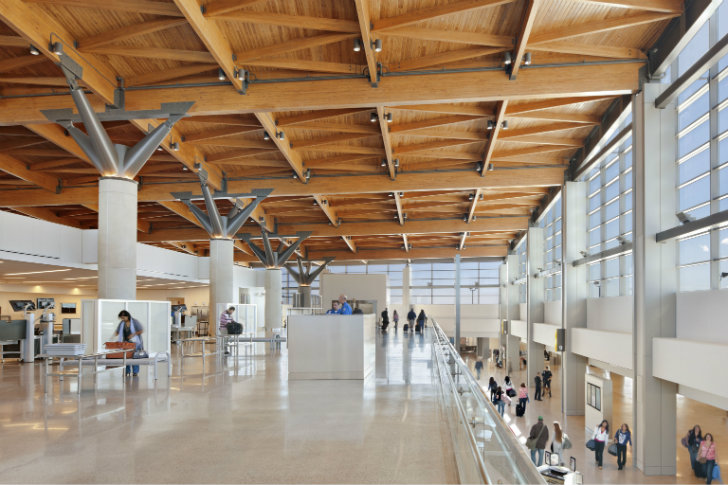






 Portland Jetport-GenslerThe newly renovated <a href="http://www.portlandjetport.org/" target="_blank">Portland International Jetport</a> in Portland, Maine is the second commercial airport to achieve LEED Gold certification. Designed by <a href="http://www.gensler.com/" target="_blank">Gensler</a>, the new LEED-certified airport follows on the heels of their renovation of SFO T2, which was the first LEED Gold airport in the nation. Spurred on by the commitment of the city of Portland to ensure a high level of sustainability, the jetport makes use of materials from the region and has the largest geothermal heating and cooling system in the state. Despite how energy intensive airports often are, the Portland Jetport and Gensler are showing how beautiful, sustainable and energy-efficient they can be.1
 Portland Jetport-GenslerThe <a href="http://www.portlandjetport.org/" target="_blank">Portland International Jetport</a> expansion in Maine opened last fall in 2011, but was just awarded LEED Gold certification, making it the second commercial terminal in the United States to achieve this status.2
 Portland Jetport-GenslerThe 160,000-square-foot, three-gate facility includes a new ticketing hall, a modern baggage handling area that places TSA baggage screening out of view, six new passenger checkpoint lanes, new departures lounges, concessions, and food court seating.3
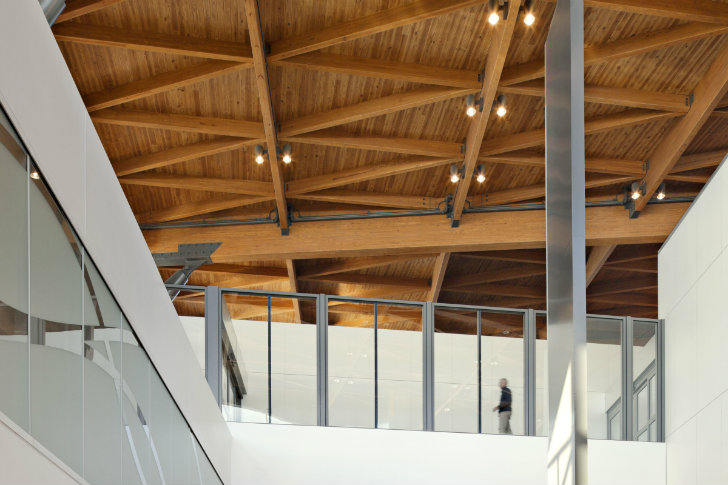
 Portland Jetport-GenslerInspired by the natural beauty and resources of Maine, the terminal features timber construction, rarely seen in airport architecture.4
 Portland Jetport-GenslerNatural daylighting, FSC certified glue laminated structural timbers, and low maintenance, polished concrete floors add to the sustainability strategies.5
 Portland Jetport-GenslerTo make the airport more energy efficient, <A href="http://www.gensler.com/" target="_blank">Gensler</a>, with the help of <a href="http://www.amec.com/" target="_blank">AMEC Earth and Environmental</a> and <a href="http://www.haleyaldrich.com/nodes/1.aspx?path=/" target="_blank">Haley and Aldrich</a>, designed a dual strategy system that relies on geothermal heating and cooling along with a radiant floor system.6
 Portland Jetport-GenslerThe geothermal system was made possible by the first ever a<a href="http://www.faa.gov/airports/environmental/vale/" target="_blank"> Voluntary Airport Low Emissions (VALE) grant</a> from the Federal Aviation Administration.7
 Portland Jetport-GenslerInstalled under the parking lot, the system features 120 wells, each 500 feet deep to serve as a giant thermal battery - rejecting heat in the summer and absorbing heat in the winter.8
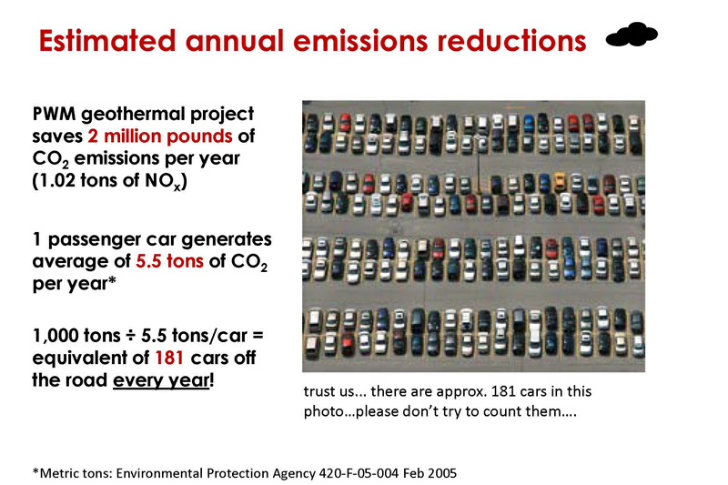
 Portland Jetport-GenslerThe energy efficient heating and cooling program will save $200,000 a year on fuel costs and 2 million pounds of CO 2 emissions per year, which is the equivalent of taking approximately 180 cars off the road per year.9
 Portland Jetport-Gensler“This project is a critical step forward for the Jetport and will usher in a new level of service and efficiency for our nearly 1.8 million annual passengers,” says Jetport Director Paul Bradbury. “The new terminal with its clean lines, intuitive wayfinding, is a model for passenger efficiency and user friendliness, yet it still provides a distinctive sense of place. From the expansive wood structure to the granite finishes, it proclaims loudly its roots in Portland and the great state of Maine.”10
 Portland Jetport-Gensler“We designed the terminal to honor and showcase Maine’s natural resources, while creating a welcoming atmosphere for passengers,” says Gensler principal Bill Hooper, a leader of the firm’s global aviation practice. “In each of our global airport designs, we create terminals that draw from local materials and traditions. Maine’s legacy of shipyards and craftsmanship was a real inspiration for our design at Portland Jetport.”11
 Portland Jetport-GenslerThe Portland International Jetport is the second airport in the US to achieve LEED Gold certification.12

