


Start Slideshow


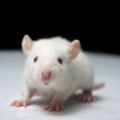 Baby mouseIn a new study published in the journal , Harvard researchers claim to have discovered a new compound that can revive old cells in mice and make them act “young” again. The chemical, called NAD, is found naturally in mouse -- and human -- bodies, but is gradually depleted from cells as they age. By increasing the amount of NAD in tissue from a 2-year-old mouse, the scientists were actually able to “trick” the cells into acting like those from a 6-month-old animal, the equivalent of a 60-year-old human’s cells becoming like a 20-year-old’s....<br><br><a href='https://inhabitat.com/harvard-researchers-successfully-reverse-aging-in-mice/'>READ ARTICLE</a>1
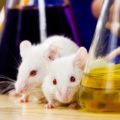 Mice in lab with beakersIn a new study published in the journal , Harvard researchers claim to have discovered a new compound that can revive old cells in mice and make them act “young” again. The chemical, called NAD, is found naturally in mouse -- and human -- bodies, but is gradually depleted from cells as they age. By increasing the amount of NAD in tissue from a 2-year-old mouse, the scientists were actually able to “trick” the cells into acting like those from a 6-month-old animal, the equivalent of a 60-year-old human’s cells becoming like a 20-year-old’s....<br><br><a href='https://inhabitat.com/harvard-researchers-successfully-reverse-aging-in-mice/'>READ ARTICLE</a>2
