


Start Slideshow







 How to Make A Foraged Spring Salad From Weeds Growing in Your BackyardWith the arrival of spring comes the pleasure of spending time outdoors. Whether it be enjoying the fresh warm air, the abundance of new greens and herbs or the ability to spend entire days outside, we just can't get enough. So what could be better than combining them all into one splendid activity which replaces the need to grocery shop or make a trip to the gym?1
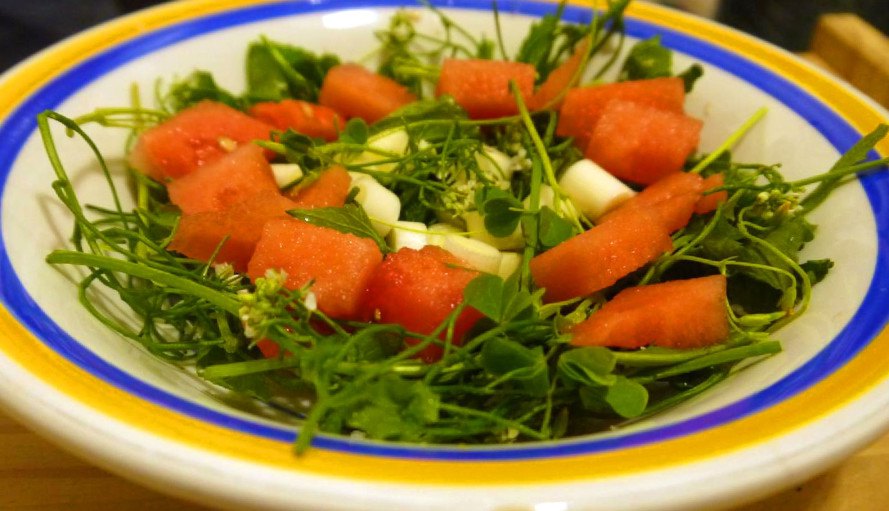
 Spring Salad Top Down ViewHere's how to make a delectable foraged spring salad that will impress all of your friends.2
 How to Make a Backyard Foraged SaladWe love <a href="http://inhabitat.com/tag/foraging">foraging</a> here at Inhabitat - the idea that you can find food growing around your house is always exciting and inspiring, and sparks our inner sleuth / hunter-gatherer. When you go foraging you can substitute a trip to the grocery store and the gym, and instead get some fresh air, exercise and all of the food you need for dinner in one go with a lovely walk outside!3
 Wildman Steve Brill foragingWe recently set off on a foraging adventure in the urban jungle of New York City to collect wild salad greens in Central Park with NYC's beloved master forager, <a href="http://inhabitat.com/6-delicious-plants-you-can-forage-in-your-local-urban-park-video/">"Wildman" Steve Brill</a>.4
 Wild Violets in bloom<a href="http://www.wildmanstevebrill.com/Plants.Folder/Violets.html">Violets</a> may be known for their beauty, but their petals aren't the only coveted part of the plant. The violet's heart-shaped, saw-toothed leaves serve as a fabulous substitute for lettuce in salads. They are most delicious in the spring before they become tough in the summer months. (Note: Be sure to not mistake violets for poisonous dwarf larkspur, which has a similar looking flower, but contains a "spur" behind the flower and different leaves. Be also weary of Monkshood, which has a helmet-like upper sepal covering 2 petals.)5
 Cattails in a marshYou're likely familiar with this iconic wetlands plant which looks like a corn dog atop a reed. Before <a href="http://www.wildmanstevebrill.com/Plants.Folder/Cattails.html">cattails</a> develop their bushy tails, they are ripe for the picking! Late spring is the ideal time to enjoy this marsh plant. At this time the cattail's light green leaves reach nearly nine feet tall and their hearty white stalks resemble the flavor of a fresh cucumber. Cattails can be foraged for on the sides of a pond, lake or wetland. Give the stalk a good yank from the ground and peel it right before eating, as the stalk will stay freshest when left unpeeled.6
 Garlic Mustard on a paper towelGarlic mustard gets a bad rap as a '<a href="http://inhabitat.com/nyc/5-common-weeds-that-make-healthy-and-delicious-teas/">weed</a>', removed from most public land in droves. But most people have no idea that this plant is quite delectable and smells and tastes just like the name suggests, adding a delightful savory flavor to salads. They are easily foraged and often plentiful in parks (before they are removed), as most insects naturally dislike the taste of garlic. <a href="http://www.wildmanstevebrill.com/Plants.Folder/Garlic%20Mustard.html">Garlic mustard</a> becomes more pungent and less bitter as it matures in the spring, even drawing overtones of sweetness. They are usually found in large, shady patches of the woods and are easily (and plentifully!) harvested by stripping the flowered tops off the plant.7
 Garlic Mustard close upGarlic mustard gets a bad rap as a '<a href="http://inhabitat.com/nyc/5-common-weeds-that-make-healthy-and-delicious-teas/">weed</a>', removed from most public land in droves. But most people have no idea that this plant is quite delectable and smells and tastes just like the name suggests, adding a delightful savory flavor to salads. They are easily foraged and often plentiful in parks (before they are removed), as most insects naturally dislike the taste of garlic. <a href="http://www.wildmanstevebrill.com/Plants.Folder/Garlic%20Mustard.html">Garlic mustard</a> becomes more pungent and less bitter as it matures in the spring, even drawing overtones of sweetness. They are usually found in large, shady patches of the woods and are easily (and plentifully!) harvested by stripping the flowered tops off the plant.8
 Yellow Wood Sorrel, Oxalis StrictaThe Yellow Wood Sorel might be the most delightful of spring's wild greens. Believe it or not, this delicate <a href="http://en.wikipedia.org/wiki/Oxalis">shamrock-shaped plant</a> which it tastes just like lemonade! <a href="http://www.wildmanstevebrill.com/Plants.Folder/Sorrel.html">Wood Sorel</a> can be found along the sides of roads and trails, and in partially-sunny wooded areas. The five-petaled yellow flowers are about as wide as a pencil eraser and have the same vibrant tone as buttercups. The green leaves of Oxalis plants are very distinctive in that they look exactly like the Irish shamrock you seen around Saint Patricks day, with heart-shaped folded leaves in sprigs of three. Some even say that Oxalis (and not clover) was the original <a href="http://en.wikipedia.org/wiki/Shamrock">"Irish Shamrock"</a> that Saint Patrick used to explain the Holy Trinity.9
 Petey Foraging for Yellow Wood SorelWe found some lovely wood sorrel growing wild in a backyard.10
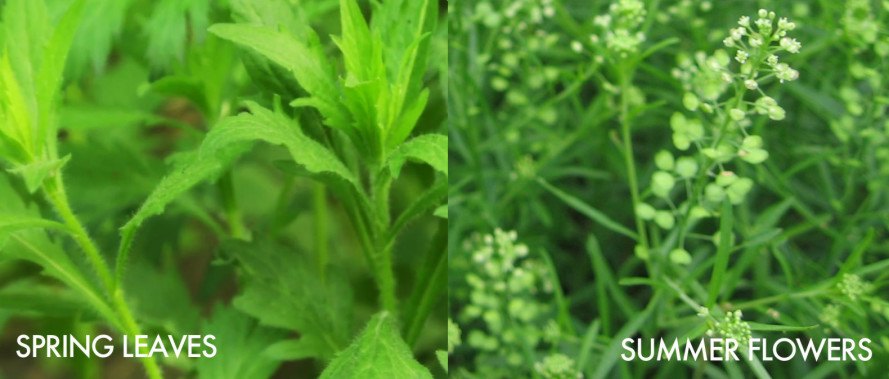
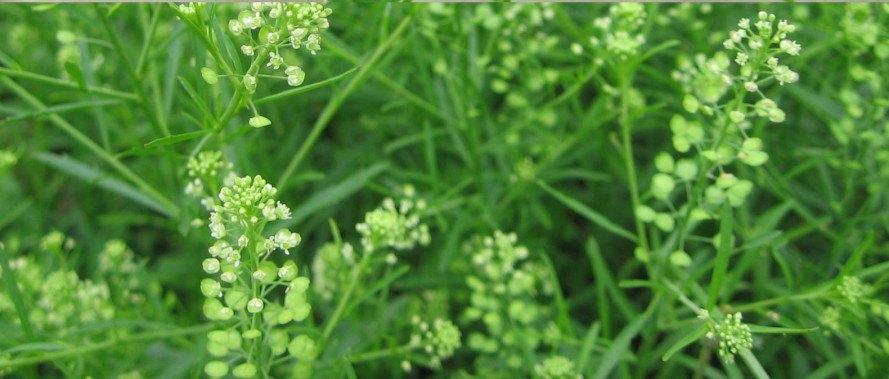
 Poorman's Pepper on a paper towelThe <a href="http://www.wildmanstevebrill.com/Plants.Folder/PoorMan'sPepper.html">Poor Man's Pepper</a>'s toothed leaves, white flowers, and flat, circular seedpods contain a strong, spicy hint of horseradish. It grows plentifully along roadsides, sandy soil and rocks.11
 Close up image of poor man's pepperThe <a href="http://www.wildmanstevebrill.com/Plants.Folder/PoorMan'sPepper.html">Poor Man's Pepper</a>'s toothed leaves, white flowers, and flat, circular seedpods contain a strong, spicy hint of horseradish. It grows plentifully along roadsides, sandy soil and rocks.12
 Poor Mans PepperThe <a href="http://www.wildmanstevebrill.com/Plants.Folder/PoorMan'sPepper.html">Poor Man's Pepper</a>'s toothed leaves, white flowers, and flat, circular seedpods contain a strong, spicy hint of horseradish. It grows plentifully along roadsides, sandy soil and rocks.13
 Foraging for Field PennycressIf you can't find Poor Man's Pepper, Field Pennycress is a great alternative and has nearly the same spicy horseradish flavor. It contains seeds that look like pennies and has flowers with four white petals shaped like a cross.14
 Foraging for Common MallowCommon Mallow is closely related to Hibiscus, with rounded, notched and pleated leaves and a long-leafed, tubular flower. The mild mallow is a great way to offset the other spicy greens in our salad, while adding a varied texture.15
 Spring-Salad-VideoTo assemble the salad, make a bed of 'lettuce' with your violet leaves, then add the cattail cubes, garlic mustard, yellow wood sorel, and a sprinkling of poor man's pepper. Top with the watermelon and pine nuts (if desired) or any other fruits and nuts you prefer. Drizzle with balsamic vinegar and olive oil, or the dressing of your choice.16


