


Start Slideshow


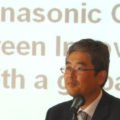 Katsumi TomitaLast month, we brought you news about <a href="http://inhabitat.com/exclusive-panasonic-announces-plan-to-cut-40-million-tons-of-co2-photos-of-the-new-ene-farm-fuel-cell/">Panasonic's decision to completely revamp their company</a> to focus on one goal: becoming the number one green innovation company in the electronics industry. While it's very clear to us (since we write about it on a daily basis) that sustainability makes good business sense, we were very interested to hear about what inspired <a href="http://inhabitat.com/index.php?s=panasonic">Panasonic</a>, one of the largest electronics companies in the world, to make such a drastic change. To get a little insight into the thought process that went into the decision as well as what Panasonic is hoping going green will do for its bottom line, we spoke to Katsumi Tomita, manager of the company's Corporate Environmental Affairs Division's communication team. Read on to learn more about how Panasonic intends to reach their ambitious goal, the progress they are making currently and how Japanese consumers have responded thus far to the company's eco products.1
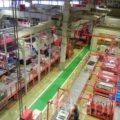 PETEC Panasonic Recycling Facility<h3>Inhabitat: Can you tell us a little bit about your role at Panasonic?</h3> <big><strong>Tomita: </strong></big>My title is Manager of the Communication Team in Corporate Environmental Affairs Division, Environmental Planning Group. My role in this organization is to communicate about <a href="http://inhabitat.com/index.php?s=panasonic">Panasonic</a>’s corporate environmental affairs initiatives outside the company through trade shows and other public forums, the Internet, environmental reports and more.2
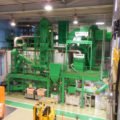 PETEC Panasonic Recycling Facility<h3>Inhabitat: Last month, you outlined for us Panasonic's 100th anniversary vision to become the number 1 green innovation company in the electronics industry by 2018. When and why did your company decide to make that its #1 goal?</h3> <big><strong>Tomita: </strong></big>This company vision was decided and announced officially by our president, Mr. <a href="http://people.forbes.com/profile/fumio-ohtsubo/51609">Fumio Ohtsubo</a> in January 2010. Global environmental issues, including global warming, are problems of great urgency. As a responsible corporate member of society, Panasonic regards these matters as extremely important. The company’s future growth will be achieved in line with what we can contribute to the environment.3
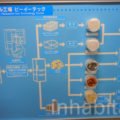 PETEC Panasonic Recycling Facility<h3>Inhabitat: Panasonic is a gigantic company with many resources available to it. However, shifting the entire focus of a corporation and the mindsets of 366,937 employees is a humongous undertaking. Was there some kind of financial analysis done assessing what kinds of future benefits turning the company towards a greener focus would have before it was decided or was it obvious to management that green products were the wave of the future and therefore the best possible decision?</h3> <big><strong>Tomita: </strong></big>In the effort to achieve a sustainable society, any company that is not prioritizing environmental initiatives will not survive. <a href="http://www.panasonic.com/">Panasonic</a> decided to place environmental factors at the core of all of our corporate activities. My division, Corporate Environmental Affairs Division, has not been directly involved in the financial analyses; such analyses would be the function of our corporate planners. However, the decision to pursue this vision was made at the very highest levels by Mr. Ohtsubo.4
 PETEC Panasonic Recycling Facility<h3>Inhabitat: While we're confident that the people at Panasonic care about the environment, there is clearly also a business-related reason for the decision to focus on making greener goods. Do you feel that companies who are not shifting their focus towards sustainable products are missing the boat?</h3> <big><strong>Tomita: </strong></big>I am not in the position to talk about the situation of other companies. However, speaking for Panasonic, we can say that for a company like ours it might not be possible to survive over the mid- to long-term without eco-responsible products or specific environmental initiatives.5
 PETEC Panasonic Recycling Facility<h3>Inhabitat: Where do you think you stand in the green electronics game as of now? You have so many environmentally conscious, energy-saving products that it seems like you might be ahead of many other electronics companies in this aspect - do you think that is the case?</h3> <big><strong>Tomita: </strong></big>Compared to our direct competitors, I am confident that Panasonic is ahead. It’s not just us saying that, too. We have been recognized in the top ranks among companies for our performance in this area by third parties like the <a href="http://www.sustainability-index.com/">Dow Jones Sustainability Index</a>, Carbon Disclosure Project and independent rankings.6
 PETEC Panasonic Recycling Facility<h3>Inhabitat: At your presentation last month in Japan, you mentioned that Panasonic will be implementing CO2 reduction quotas for its employees where if they do not reduce the amount of CO2 that is expected of their departments, it will be reflected in their salaries. Could you explain this system to our readers? In your experience, does this type of performance-based pay system generally work?</h3> <big><strong>Tomita: </strong></big><a href="http://www.panasonic.com/">Panasonic Corporation</a> is made up of several division companies. Our headquarters uses various criteria to evaluate each division company’s performance and reflect this in terms of compensation. Ordinarily, for us and other companies, those criteria include sales, profit and other indicators of the actual business. Panasonic’s particular innovation is to add the achievement of CO2 reduction by each division company to the traditional factors in performance evaluation criteria. I believe this is a fairly unique approach in this industry as I have not heard of other such examples in the electronics business.7
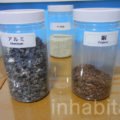
 PETEC Panasonic Recycling Facility<h3>Inhabitat: Panasonic already has a rather robust recycling center and seems to be contemplating using more recycled material in its products. In terms of accounting, does recycling materials actually save your company money or is it currently more expensive?</h3> <big><strong>Tomita: </strong></big>Right now, it is not evident that there is any particular financial advantage coming from cost reduction by utilizing recycled materials. <a href="http://panasonic.net/eco/petec/">PETEC </a>(Panasonic's recycling factory) was established is be in accordance with the respective Japanese laws on the recycling of home electronics appliances. PETEC is mainly run by recycling fees consumers pay when their electronics products reach the end of their useful lives, and by design it makes neither profit nor loss - it just breaks even. PETEC’s <a href="http://inhabitat.com/behind-the-scenes-panasonic-shows-inhabitat-how-it-recycles-old-tv-screens-into-glass-wool/">recycled materials </a>are sold to outside companies by a Panasonic Group company. We cannot say that materials recycled in this way are always relatively cheaper than virgin materials.8
 PETEC Panasonic Recycling Facility<h3>Inhabitat: How has the Japanese consumer market reacted to energy-saving products? Are they receptive?</h3> <big><strong>Tomita: </strong></big>Energy-saving products are well accepted in the Japanese market. The energy-saving function is very easy for consumers in Japan to understand and they can see a benefit since it will permit them to save on the cost of energy in their households. Often when a new technology is applied, consumers know that there will some sort of higher initial cost, but if consumers see that the additional cost would be offset by the reduction in the running costs over the long run, they will start to make the purchase. There are many such well-informed consumers in Japan.9

