


Start Slideshow

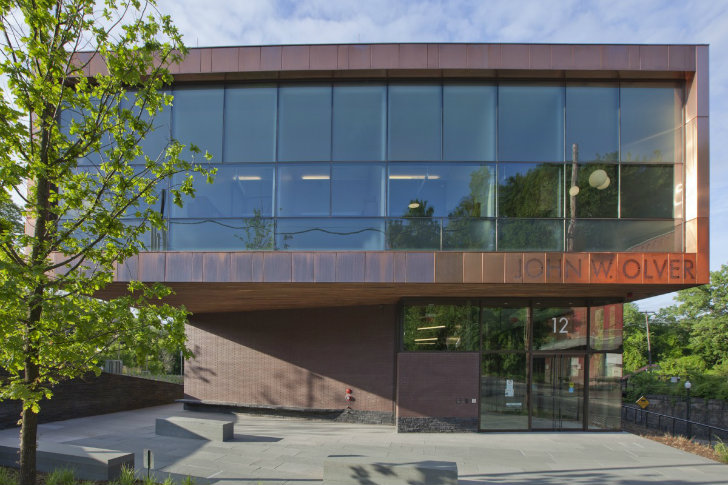





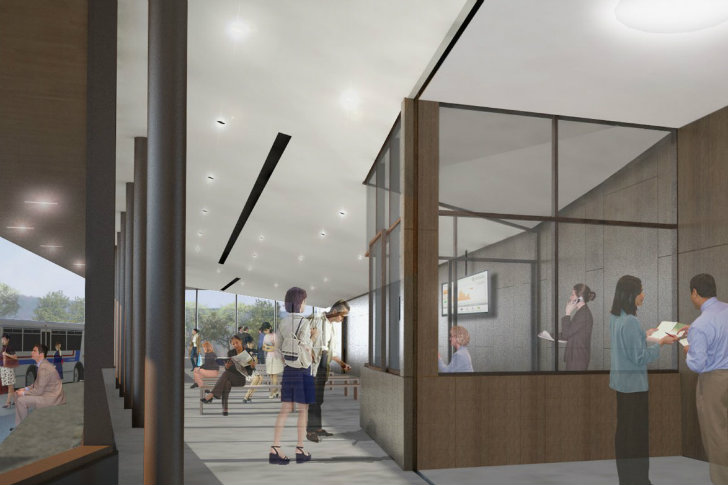


 John W Olver Transit Center-Charles Rose ArchitectsWe get excited at the sight of new transit stations because they encourage even more people to take public transportation, but we really get amped when we see a station that as sustainably designed as the <a href="http://www.charlesrosearchitects.com/projects/olver-transit-center/" target="_blank">John W. Olver Transit Center</a> in Greenfield, Massachusetts. It's the first transit center in the nation to be <a href="http://inhabitat.com/zero-energy/">net zero energy</a> thanks to a 7,300 sq ft photovoltaic system, geothermal heat pumps and an on-site wood pellet boiler. Designed by local firm <a href="http://www.charlesrosearchitects.com/" target="_blank">Charles Rose Architects</a>, the bus station provides essential infrastructure while educating passengers, and it's expected to revitalize Greenfield's downtown area.1
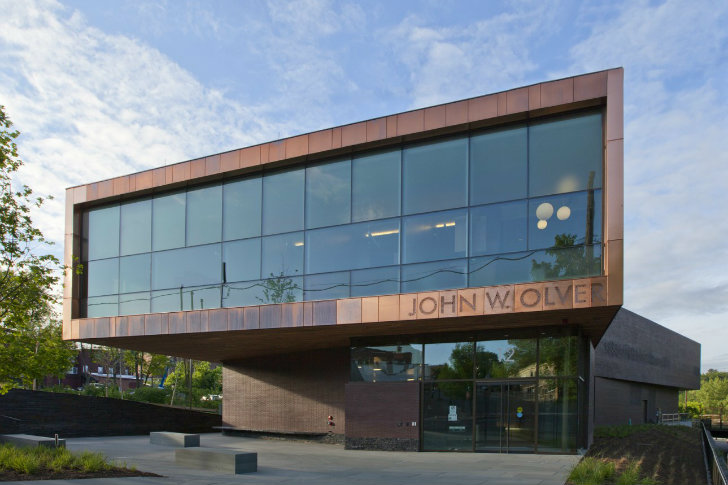
 John W Olver Transit Center-Charles Rose ArchitectsJohn W. Olver Transit Center by Charles Rose Architects serves as the new central bus station for the city of Greenfield in Massachusetts.2
 John W Olver Transit Center-Charles Rose ArchitectsThe 24,000 sq ft, two-story building also features government offices on the top floor and is expected to serve as the future train depot.3
 John W Olver Transit Center-Charles Rose ArchitectsHighly innovative in terms of design and construction, the transit center is also respectful of the city's historic roots.4
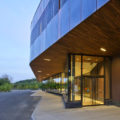
 John W Olver Transit Center-Charles Rose ArchitectsUsing brick, copper and locally-sourced stone, the building's design is a nod to the city's downtown architecture.5
 John W Olver Transit Center-Charles Rose ArchitectsThe western facade features a computer generated screen that minimizes direct solar heat gain, while windows were been optimally placed to maximize heat, shade and daylighting.6
 John W Olver Transit Center-Charles Rose ArchitectsOther strategies to further reduce energy consumption include occupancy sensors, low energy lighting, air preheating with a solar wall and geothermal system and energy heat recovery.7
 John W Olver Transit Center-Charles Rose ArchitectsWorking closely with mechanical and electrical engineers during the design phase, Charles Rose Architects ensured they could reduce energy use and make the building net zero energy.8
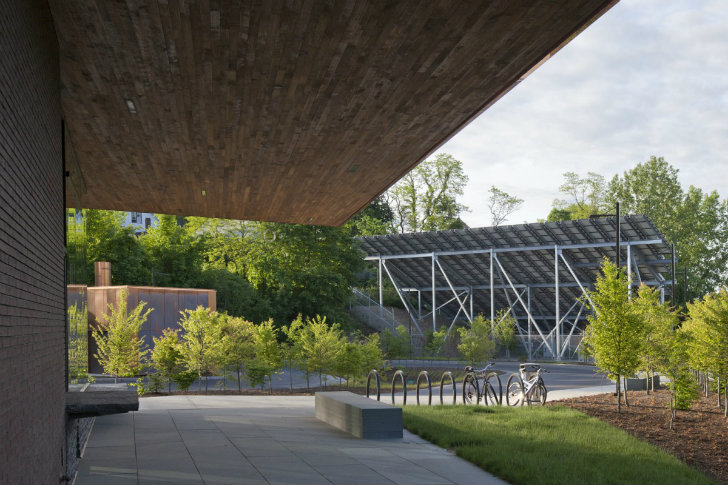
 John W Olver Transit Center-Charles Rose ArchitectsThe building utilizes 22 geothermal wells for efficient heating and cooling and a 750 MBH wood pellet boiler for additional heating.9
 John W Olver Transit Center-Charles Rose ArchitectsA 98 kW ground-mounted photovoltaic array supplies the additional electricity needed by the facility.10
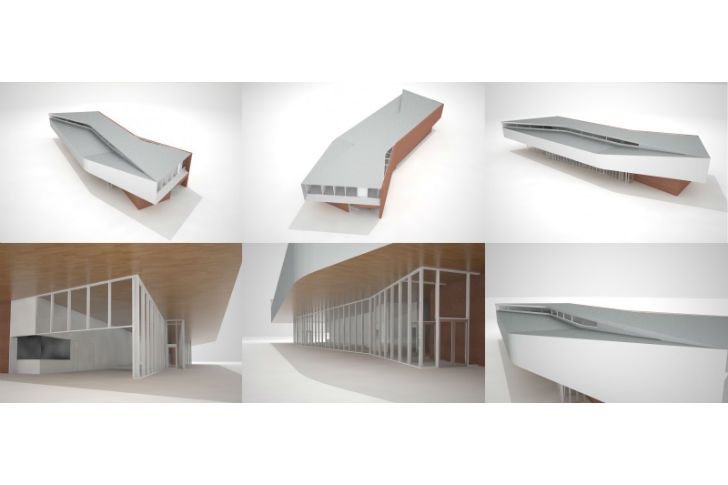
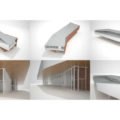 John W Olver Transit Center-Charles Rose ArchitectsModel of the transit center.11
 John W Olver Transit Center-Charles Rose Architects“Zero-net-energy design has revolutionized the way we work, “ Charles Rose <a href="http://archinect.com/firms/release/1149/first-zero-net-energy-transit-center-in-the-u-s-photographs-released/59624589" target="_blank">says</a>.12
 John W Olver Transit Center-Charles Rose Architects“We are creating buildings that are highly integrated. In other words, the only way to get to net-zero is by integrating mechanical and electrical engineering into the conceptual design phase. It’s a fundamentally different way of designing a building. Our mechanical engineers are serious collaborators now. That’s very important.”13
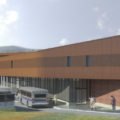
 John W Olver Transit Center-Charles Rose ArchitectsRendering of the John W Oliver Transit Center.14


