


Start Slideshow


 Phipps Conservatory Sustainability<em>The Phipps Conservatory welcome center</em> <p>Pittsburgh's <a href="http://phipps.conservatory.org/" target="_blank">Phipps Conservatory</a> is preparing to open one of the greenest buildings in the world. Built to meet the <a href="https://ilbi.org/lbc" target="_blank">Living Building Challenge</a>, the most stringent grading system for green buildings, the conservatory's new <a href="http://phipps.conservatory.org/project-green-heart/green-heart-at-phipps/center-for-sustainable-landscapes.aspx" target="_blank">Center for Sustainable Landscapes</a> (CSL) will feature a lush green roof, a sprawling solar panel array, passive design, constructed wetlands, a lagoon system, and much more. A team of locally-based designers, engineers, and architects collaborated on the integrated design process of the 24,250 sq. ft. building, which is expected to exceed <a href="http://inhabitat.com/tag/leed-platinum" target="_blank">LEED Platinum</a> certification. The stunning net-zero energy and water structure brings a new level of sustainable beauty to Phipps, mimicking nature and functioning as efficiently as a flower.1
 Phipps Conservatory Center for Sustainable LandscapesQuite impressively, the <a href="http://phipps.conservatory.org/project-green-heart/green-heart-at-phipps/center-for-sustainable-landscapes.aspx" target="_blank">Center for Sustainable Landscapes</a> at Phipps Conservatory meets or exceeds the three toughest green building and landscape standards: the <a href="https://ilbi.org/lbc" target="_blank">Living Building Challenge</a>, <a href="http://www.usgbc.org/DisplayPage.aspx?CMSPageID=220" target="_blank">LEED Platinum Certification</a>, and the <a href="http://www.sustainablesites.org/" target="_blank">Sustainable Sites Initiative</a>. This aerial rendering shows the whole CSL, with the current Phipps buildings in white.2
 Phipps Conservatory Center for Sustainable LandscapesPhipps has been going green for the last 17 years, and the CSL is the third major initiative under the direction of the conservatory's Executive Director Robert V. Piacentini. "This is pulling together everything we've been working on for the last several years," says Piacentini.3
 Phipps Conservatory CSL ConstructionSlated to open at the end of next month, the CSL was created through an integrated design process with a team of professionals all from within the region. Pittsburgh-based firm the <a href="http://www.tda-architects.com/" target="_blank">Design Alliance Architects</a> lead on the design team, with principal architect Chris Minnerly as the lead.4
 Phipps Conservatory CSL ConstructionAll of the materials were sourced sustainably in the United States, and the passively-designed building will use 80 percent less energy than a typical office building of the same size thanks to building features like a green roof, abundant natural daylighting, efficient natural ventilation, and a high performance building envelope. The top of the building seen in the photo will be covered with a green roof accessible to visitors.5
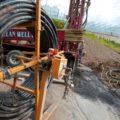 Phipps Conservatory CSL geothermal wellsAs a <a href="http://inhabitat.com/tag/net-zero/" target="_blank">net-zero</a> energy structure, the CSL will produce as much energy as it uses through geothermal, solar, and wind sources. This photos shows the installation of the geothermal wells. The 14 wells will provide about 70 percent of the building's heating and cooling energy from the ground's consistent 57 degrees.6
 Phipps Conservatory CSL solar panels378 rooftop solar panels and 125 ground-mounted solar panels will provide additional energy.7
 Phipps Conservatory CSL vertical axis wind turbineA vertical axis wind turbine atop the greenhouses will also help to power the new CSL.8
 Phipps Conservatory Center for Sustainable LandscapesOne of the most interesting features of the new building is the extensive water-treating system, which will make the CSL net-zero water by treating all wastewater and capturing rainwater on site.9
 Phipps Conservatory CSL water systemStormwater from the entire Phipps' campus will be captured and stored in two 1,700 gallon cisterns to be used for toilets and maintenance, and a tranquil lagoon system will treat additional stormwater through a seven-step cleaning process that mimics the natural process of wetlands. The constructed wetlands will treat used or sanitary water, bringing it up to <a href="http://en.wikipedia.org/wiki/Greywater" target="_blank">greywater</a> standards to water the plants. The system will save about 7 million gallons of water every year.10
 Phipps Conservatory CSL ConstructionThis photo shows the doors from the Tropical Rainforest on the right and the CSL construction site on the left. Once complete, this patio will lead to the lush plantings, roof garden, and lagoon for visitors to enjoy.11
 Phipps Conservatory CSL barn wood sidingThe CSL is covered with a beautiful salvaged barn wood siding, just one of the many sustainable-sourced materials.12
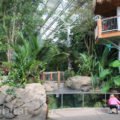 Phipps Conservatory Tropical RainforestThe <a href="http://phipps.conservatory.org/project-green-heart/green-heart-at-phipps/tropical-forest-conservatory.aspx">Tropical Rainforest at Phipps</a> is the greenest and most energy efficient conservatory in the whole world.13
 Phipps Conservatory Welcome CenterPhipps's first green building was the stunning <a href="http://phipps.conservatory.org/project-green-heart/green-heart-at-phipps/welcome-center.aspx">Welcome Center</a>, which achieved LEED Silver certification.14


