


Start Slideshow


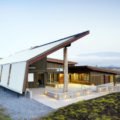 Hawaii Preparatory AcademyWe're getting jealous here -- with all the <a href="http://inhabitat.com/2010/05/27/the-green-school-showcases-bamboo-construction-in-indonesia/" target="_blank">absolutely gorgeous green schools</a> popping up around the world, we're wishing we could go back to school. <a href="http://www.archdaily.com/64732/hawaii-preparatory-academy-energy-laboratory-flansburgh-architects/" target="_blank">ArchDaily</a> tells us that the <a href="http://www.hpa.edu/" target="_blank">Hawaii Preparatory Academy</a> finished their new <a href="http://www.hpa.edu/energylab" target="_blank">Energy Lab</a> in January, which not only produces more power than it needs, but also serves to educate students on renewable energy and sustainability. It's also incredibly beautiful and set on the hills of the big island in Hawaii right outside of Waimea. Designed by Boston-based <a href="http://www.faiarchitects.com/" target="_blank">Flansburgh Architects</a>, the Energy Lab is waiting for final confirmation of its LEED Platinum status as well as its <a href="http://inhabitat.com/2010/06/01/oregons-zero-energy-office-tower/" target="_blank">Living Building Challenge</a> certification.1
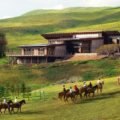 Hawaii Preparatory AcademyThe super sustainable school serves as a renewable energy learning center and provides students with a new model for learning about sciences and sustainability.2
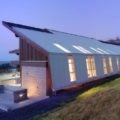 Hawaii Preparatory AcademyCompleted in January 2010, the 6,100 sq ft building was blessed (as per Hawaii tradition) and opened for classes in April.3
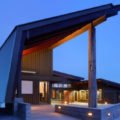 Hawaii Preparatory AcademyThe Energy Lab offers a different educational environment that not only provides an exceptional space for learning, but also teaches about sustainability through example.4
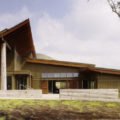 Hawaii Preparatory AcademyThe building is completely powered by renewable energy. Solar panels cover the southern sloping roof, and small-scale wind turbines are located on the hill behind the building.5
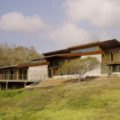 Hawaii Preparatory AcademyMore than enough solar and wind energy is provided for the Energy Lab, which only needs 8% of that power. The rest is fed into the grid and supplies power for the rest of academy.6
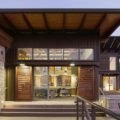 Hawaii Preparatory AcademyEnergy modeling was performed during the design stages in order to maximize daylighting and natural ventilation.7
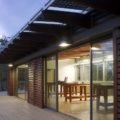 Hawaii Preparatory AcademyThe design for the building was based on a traditional triple-roofed Polynesian design -- a steep sloping roof in the back, a lower sloping roof in the middle, then a covered lanai front. The theory is that all the hot air rises up to the highest point in the roof and escapes out.8
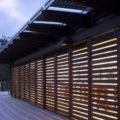 Hawaii Preparatory AcademyShading for the buildings with large overhangs and sliding screens protects the interior from the sun and inclement weather.9
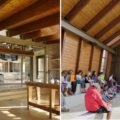 Hawaii Preparatory AcademyStudents have a chance to study and research renewable energy systems as well as other sustainable technologies.10
 Hawaii Preparatory AcademyHawaii Preparatory Academy's Energy Lab also serves as a conference facility and advanced video conferencing facility.11
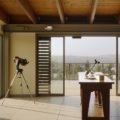 Hawaii Preparatory AcademyThe Energy Lab also includes some advanced teaching techniques that transform the traditional model of teacher in front and students behind. Everyone faces in, no one is in the back or front.12
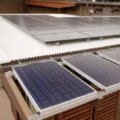 Hawaii Preparatory AcademySolar panels on the roof provide all of the energy needed for the building, and solar hot water panels produce hot water for the bathrooms and labs.13
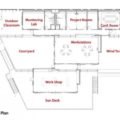 Hawaii Preparatory AcademyEach room has natural daylighting and views of the spectacular surroundings outside.14

