


Start Slideshow


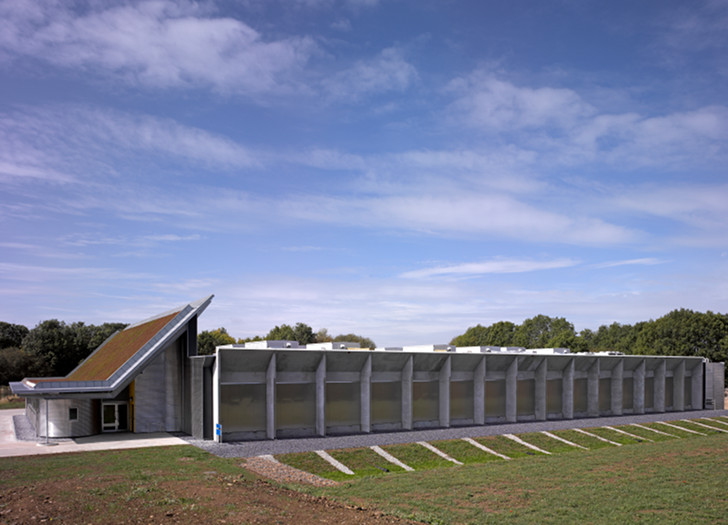



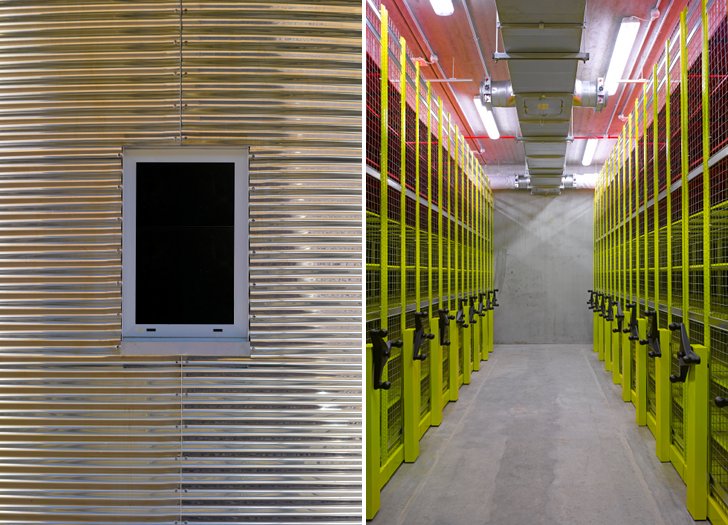



 BFI Acetate & Nitrate Film Stores-Edward Cullinan ArchitectsThe <a href="http://www.bfi.org.uk/" target="_blank">British Film Institute</a> preserves one of the largest and most significant moving image collections in the world but up until last year, the collection was housed in separate sub-par buildings incapable of ensuring the films' ongoing protection. Experts advised the Institute to consolidate their acetate and nitrate film collection into a single high tech storage facility with optimal environmental conditions and a fire-proof design. The resulting building is a highly energy efficient warehouse in Warwickshire that maintains sub-zero temperatures with low humidity. Designed by a team led by <a href="http://www.ecarch.co.uk/projects/bfi.html" target="_blank">Edward Cullinan Architects</a>, the BFI Acetate & Nitrate Film Store building is an amazing example of the best in energy efficient design, preservation, fire prevention and <a href="http://inhabitat.com/category/sustainable-building">green design</a>.1
 BFI Acetate & Nitrate Film Stores-Edward Cullinan ArchitectsAcetate and nitrate film require optimal conditions for their continued preservation and can easily burn if not protected properly.2
 BFI Acetate & Nitrate Film Stores-Edward Cullinan ArchitectsBFI knew they needed to store their film in better conditions, so they asked Edward Cullinan Architects to perform a feasibility study and provide recommendations.3
 BFI Acetate & Nitrate Film Stores-Edward Cullinan ArchitectsThe London-based firm suggested that BFI construct new facilities to consolidate their collection rather than try and <a href="http://inhabitat.com/category/green-renovation">renovate</a> one of their current facilities.4
 BFI Acetate & Nitrate Film Stores-Edward Cullinan ArchitectsThe new warehouse was completed in 2011 and breaks new ground in terms of capacity, storage conditions, green construction and energy efficiency.5
 BFI Acetate & Nitrate Film Stores-Edward Cullinan ArchitectsThe resulting <a href="http://inhabitat.com/historic-bogue-warehouse-transformed-into-outstanding-solar-powered-offices-in-salt-lake-city/">warehouse</a> has a non-nonsense design and required intense research and collaboration between the architect, engineers, film experts and the BFI.6
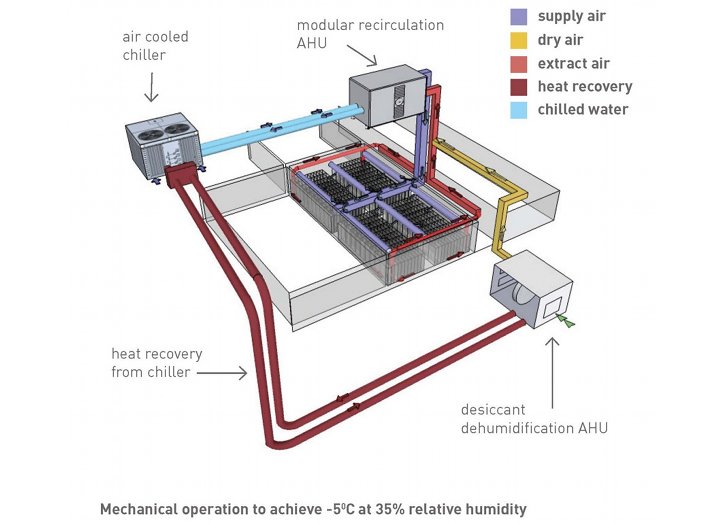
 BFI Acetate & Nitrate Film Stores-Edward Cullinan ArchitectsThe 3000 sqm warehouse stores 460,000 canisters of film in conditions of -5°C at 35% relative humidity.7
 BFI Acetate & Nitrate Film Stores-Edward Cullinan ArchitectsIn order for this not to cost an arm and a leg in energy bills, the design team came up with a system that makes use of 4 industrial chillers, 4 dehumidification plant together with 12 air handling units, heat recovery and a tight, heavily insulated and very air-tight envelope.8
 BFI Acetate & Nitrate Film Stores-Edward Cullinan ArchitectsPre-cast concrete construction provides a very stable environment and could maintain <a href="http://inhabitat.com/prefab-friday-remote-igloo-shelter/">sub-zero temps</a> for 3 consecutive summer days even if the power went out.9
 BFI Acetate & Nitrate Film Stores-Edward Cullinan ArchitectsArup Fire Engineers assisted with the design so the building could withstand the burning temperatures of nitrate film and prevent the heat spreading to the rest of the collection or environmental control systems.10
 BFI Acetate & Nitrate Film Stores-Edward Cullinan ArchitectsFor the amount of air conditioning required in the warehouse, BFI's stores use relatively low amounts of electricity and serve as an amazing example of what is possible.11
 BFI Acetate & Nitrate Film Stores-Edward Cullinan ArchitectsBFI's film stores are expected to achieve a BREEAM 'Excellent' rating.12
