


Start Slideshow






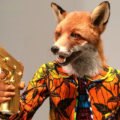 Revolution Kid (Fox) by Yinka Shonibare MBEYou're more likely to find taxidermy adorning the walls of a hunting cabin than a contemporary art museum, but a new exhibit at the <a href="http://www.nevadaart.org/">Nevada Museum of Art</a> in Reno elevates stuffed animals to a high art. Taxidermy is placed front and center at the museum's <a href="http://www.nevadaart.org/exhibitions/detail?eid=280">Late Harvest</a> exhibit, where stuffed birds, foxes, and tattooed pigs are contrasted with contemporary photography and classic wildlife paintings. The show features works by artists including Petah Coyne, Mark Dion, David Brooks, and others. The launch of the Late Harvest exhibit coincided with this year's <a href="http://www.nevadaart.org/conference2014/">Art + Environment Conference</a>, a triennial meeting of the foremost thinkers and artists in the field of environmental art. There, conference attendees explored the ways in which artists are responding to massive environmental changes that people have wrought on the planet. The three-day conference, which took place during the second week of October, was hosted by the Nevada Museum of Art.1
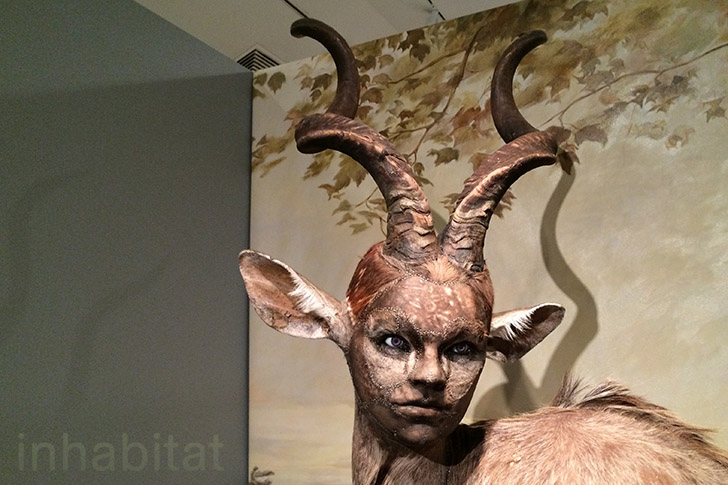
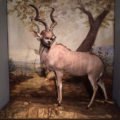 Licking the Plate by Kate ClarkAmong the most striking sculptures in Late Harvest is Kate Clark's "Licking the Plate," a hybrid creature with an animal body and a feminine human face. The piece forces viewers to decide whether they identify more with the creature's animal or human qualities, according to the curators.2
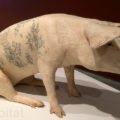 Untitled (Toile de Jouy) by Wim DelvoyeBelgian artist Wim Delvoye's tattooed pig is one of the most unusual pieces in the show. Delvoye sedated and tattooed a live pig, thereby transforming it into a four-legged work of art. That might sound like animal cruelty, but wait: According to Delvoye, the live pigs are then "indulged with comfortable, heated indoor-outdoor pigsties, and plentiful food; they live out their lives fully before succumbing to natural causes."3
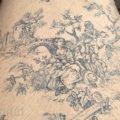 Untitled (Toile de Jouy) by Wim DelvoyeDetail of one of Wim Delvoye's tattooed pigs, on display at the Nevada Museum of Art4
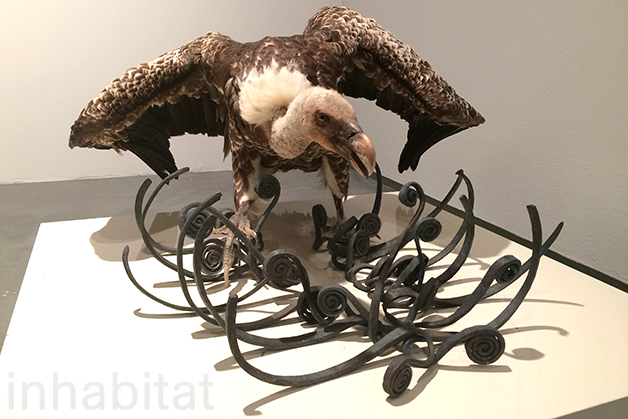
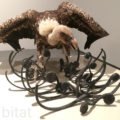 Idiots by Afke GolsteijnAfke Golsteijn's sculpture references the story of Prometheus, a mythical Greek figure who was punished by being chained to a boulder and had a bird eat his liver each day, only to have it grow back the next day. The vulture used in Golsteijn's piece was raised by a famous French falconer, and it died of natural causes.5
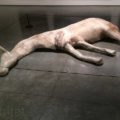 P XII by Berlinde D BruyckerePerhaps the most unsettling installation in the Late Harvest exhibit is Berlinde D Bruyckere "P XII," which consists of a featureless horse lying on the floor. "I took the motif of the dead horse as a symbol of loss in war, wherever it happens," explains Bruyckere. "I need the horse because of its beauty and its importance to us. It has a mind, a character and a soul. It is closest to us human beings."6
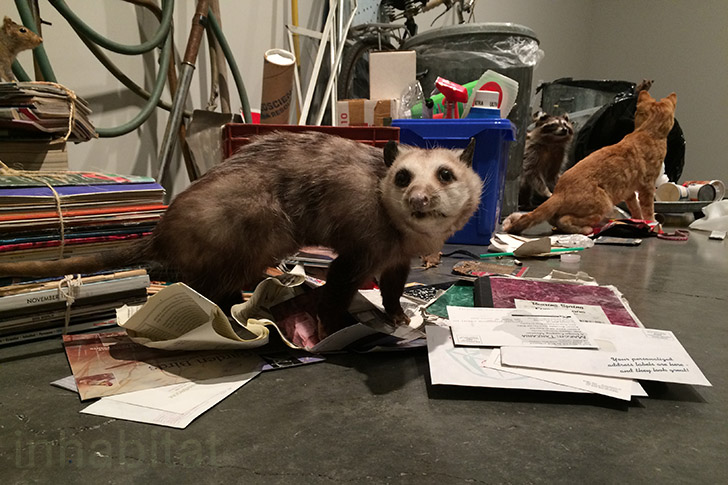
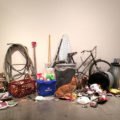 Concrete Jungle by Mark DionWe often think of wild animals as existing in a world that's completely separate from human culture. But as Mark Dion's "Concrete Jungle" sculpture observes, there are many nocturnal urban animals that adapt to and thrive in our urban environments.7
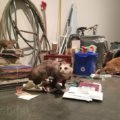 Concrete Jungle by Mark DionMark Dion's "Concrete Jungle" creates an urban environment inhabited by a possum, cat, raccoon, rat and other creatures.8
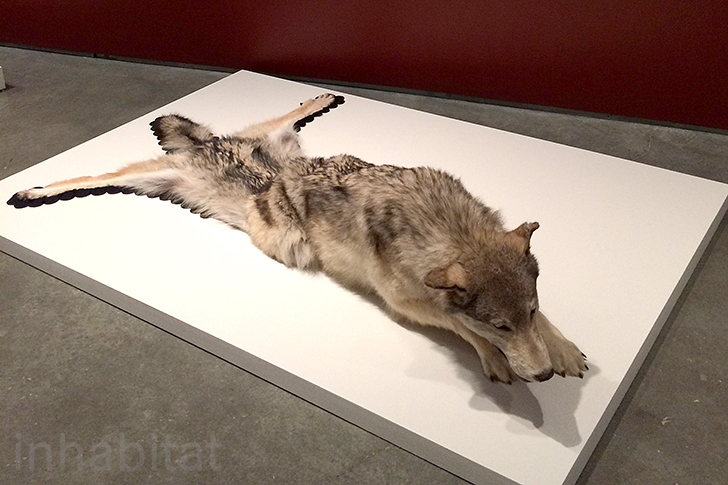
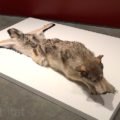 Inert Wolf by Nicholas GalaninArtist Nicholas Galanin was thinking about urban sprawl when he created "Inert Wolf," a startling piece that is part wolf and part rug.9
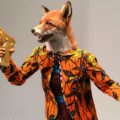 Revolution Kid (Fox) by Yinka Shonibare MBEYinka Shonibare's "Revolution Kid (Fox)" combines a taxidermied fox with imagery often associated with ethnic minorities in the UK. The sculpture memorializes the "Blackberry Riots" of 2011 in London.10
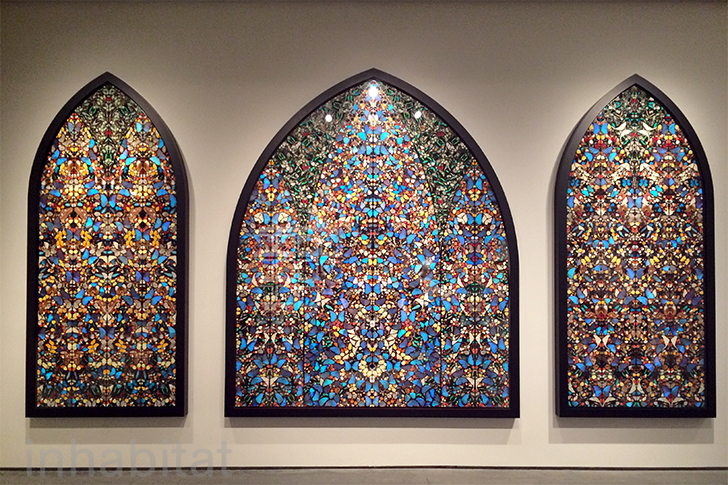
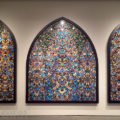 The Kingdom of the Father by Damien HirstUsing thousands of colorful butterfly wings, artist Damien Hirst created three large panels that are made to look like stained-glass windows. To Hirst, the butterfly wings represent fragility, but in this context they also evoke the sacred.11
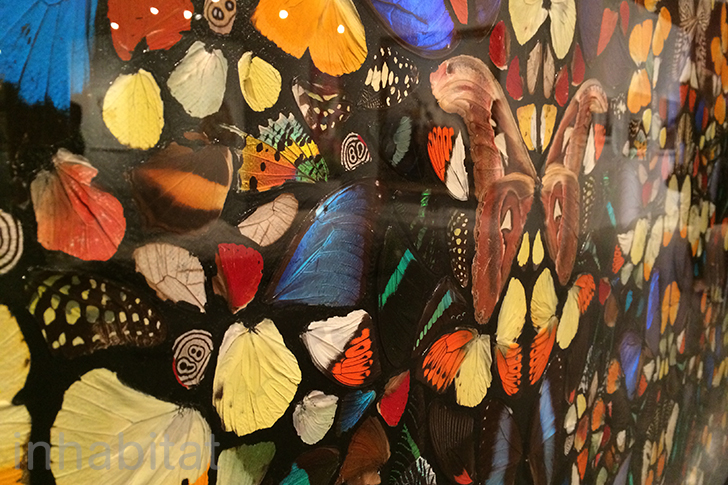
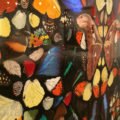 The Kingdom of the Father by Damien HirstDetail of butterflies embedded in house paint in "The Kingdom of the Father" by Damien Hirst12
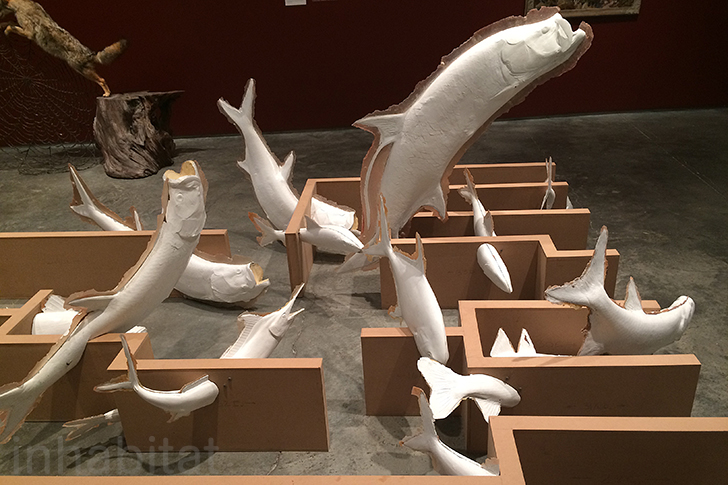
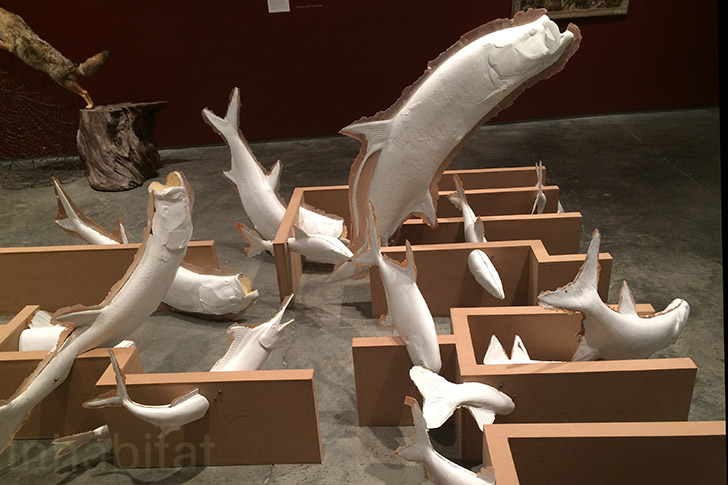
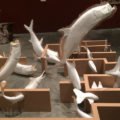 Imbroglios (a phylogenetic tree, from Homo sapiens to Megalops atlanticus) by David BrooksDavid Brooks' "Imbroglios" sculpture offers a powerful commentary on mankind's desire to control nature. The wooden structure represents a phylogenetic tree, which traces the ancestry connecting humans to the Atlantic tarpon. But the fish don't fit into our tidy categories, and they leap over the barriers.13
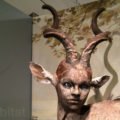 Licking the Plate by Kate ClarkKate Clark's "Licking the Plate" features a life-size creature with a human face and animal body.14
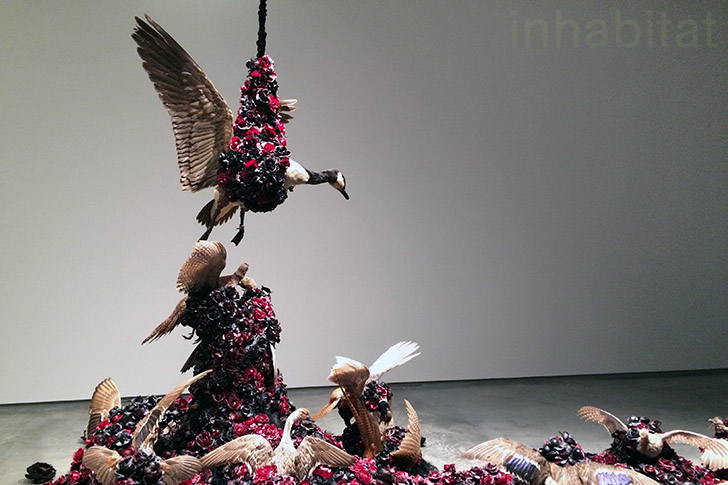
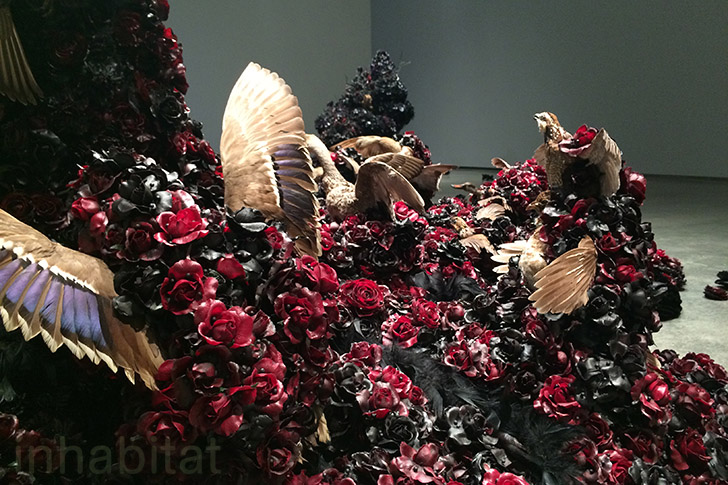
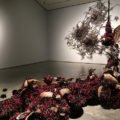 Untitled #1240 by Petah CoyneArtist Petah Coyne began working on "Untitled #1240 (Black Cloud)" in 1996, when a friend spotted several Victorian-era taxidermy birds that had been thrown in a dumpster.15
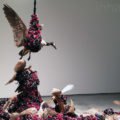 Untitled #1240 by Petah CoyneCoyne's sculpture features taxidermy birds that are enveloped in roses.16
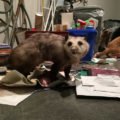 Concrete Jungle by Mark DionDion's sculpture explores how wild animals survive -- and often thrive -- in urban environments.17
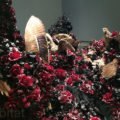 Untitled #1240 by Petah CoyneCoyne gathered all the birds and created a large installation with them, partly inspired by Dante's Inferno. "I just think it's so beautiful, because the souls are gone, and the birds remain," she explained.18
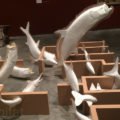 Imbroglios by David BrooksDavid Brooks is known for combining science with contemporary art.19
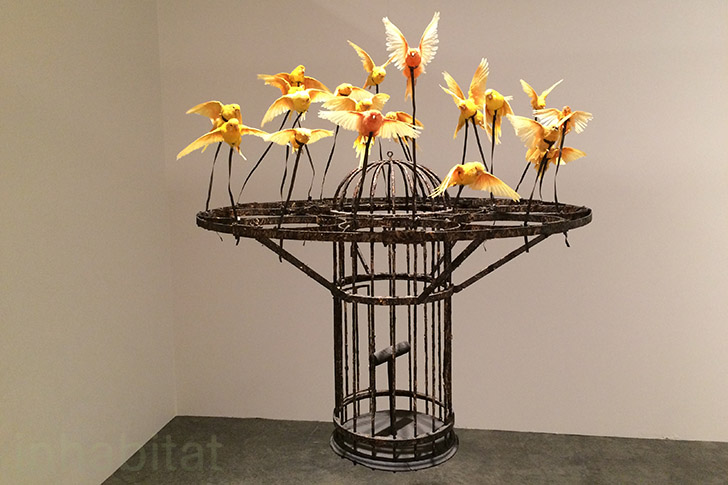
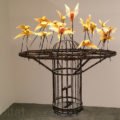 Systemic Inflammation by Polly Morgan"Systemic Inflammation" was inspired by an anonymous illustration published in The Scientific American in 1865 showing a man locked inside a bird cage being carried by canaries.20
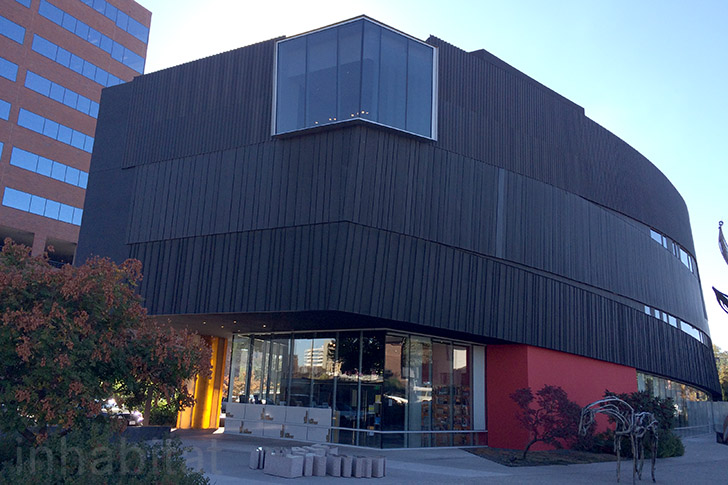
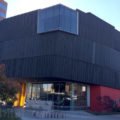 The Nevada Museum of ArtEvery three years, the Nevada Museum of Art hosts the Art + Environment Conference. The Late Harvest exhibit will be on display at the Nevada Museum of Art until January 18, 2015.21
