


Start Slideshow


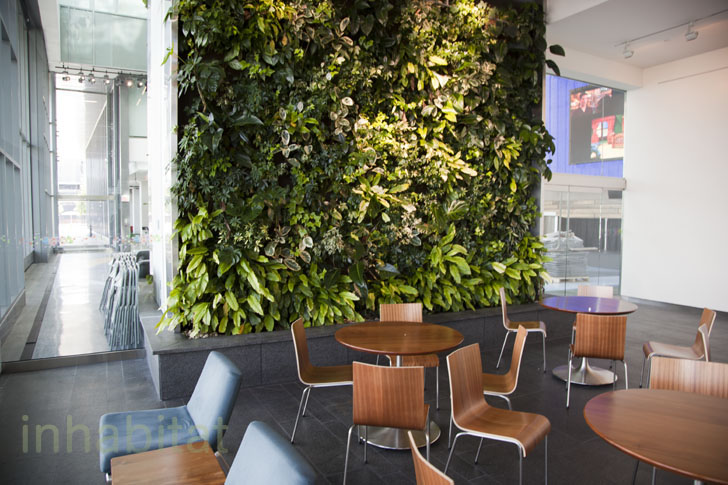


 Corus Quay TorontoCorus Entertainment, one of the biggest and most powerful media companies in Canada, has a new home in downtown Toronto - and it's one of the most sustainable new buildings in the city. The <a href="http://www.waterfrontoronto.ca/explore_projects2/east_bayfront/corus_quay">Corus Quay building</a> features several cutting-edge sustainable building strategies (including a green roof and a gray water recycling system), but the most striking aspect is easily the five-story, dual-sided living green wall that adds some aesthetically pleasing foliage to the new office building while acting as a biofilter, purifying the air. Oh, and did we mention there's a three-story slide cutting through the middle of the headquarters too?1
 Corus Quay TorontoThe building, which was completed in 2010, was one of the first buildings to be completed on Toronto's massive new waterfront development, and it serves more than 1,000 employees.2
 Corus Quay TorontoThe boxy, 500,000-square-foot building was designed by Designed by Toronto-based design firm <a href="http://www.dsai.ca/">Diamond Schmitt Architects</a>, and it's expected to earn LEED Gold certification.3
 Corus Quay TorontoThere are plenty of reasons we'd love to work at the Corus Quay building, and here's another big one: right next to that massive green wall there is a three-story indoor slide, which twists and turns, whisking workers from a third-story lounge area down to ground level.4
 Corus Quay TorontoThe vegetated wall, which was designed by <a href="http://www.naturaire.com/projects/corus-quay">Nedlaw Living Walls</a>, is located in a large, five-story atrium, which floods offices throughout the building with natural lighting.5
 Corus Quay TorontoThe wall and the atrium area also provide an inviting place for workers to take a break, with reclining Adirondack chairs that look out on dramatic views of Lake Ontario.6
 Corus Quay TorontoTo add to the already-inviting work environment, the building features three public art installations by UK artists Troika and wood paneling in the atrium area that was made using reclaimed hemlock from a 1910 ferry terminal wharf in Toronto.7


