


Start Slideshow

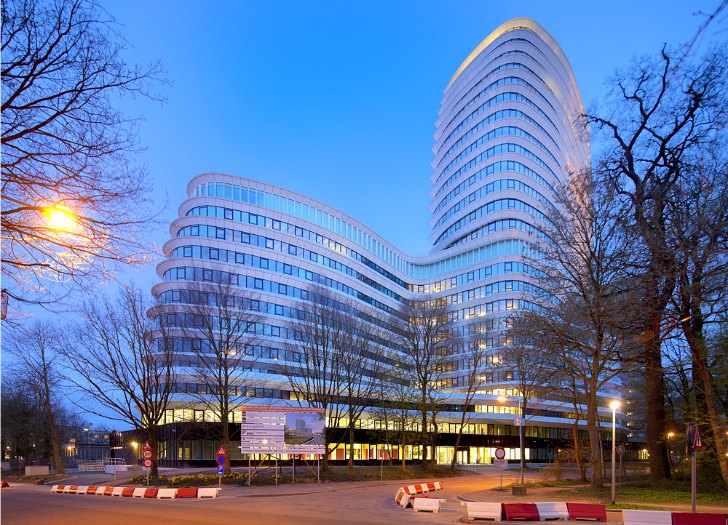
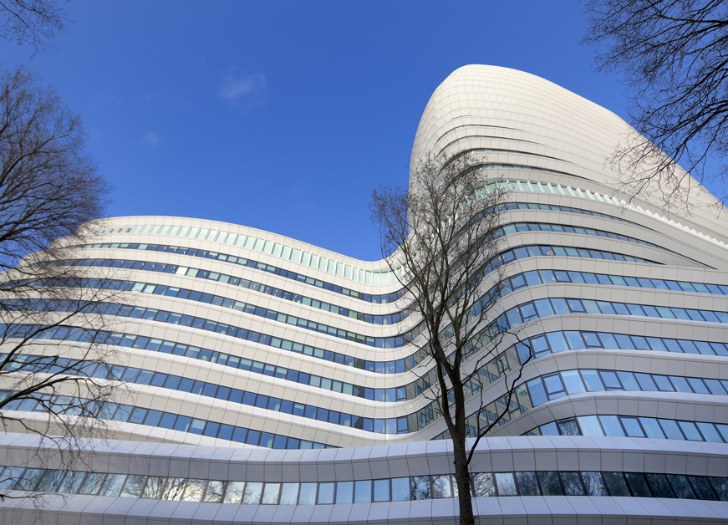
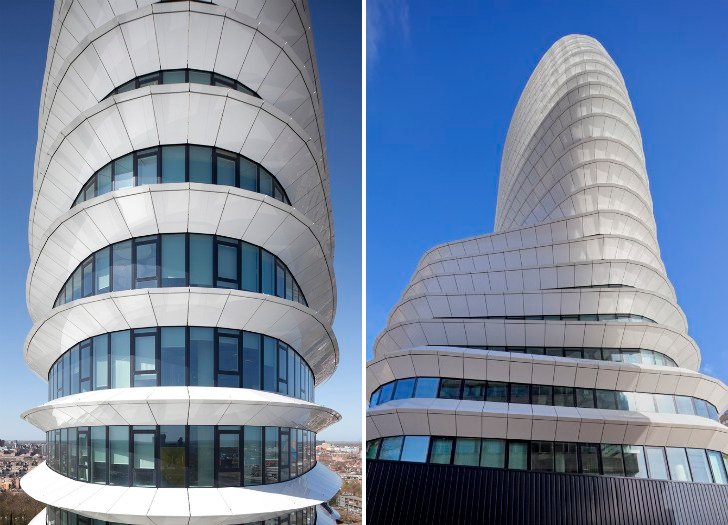
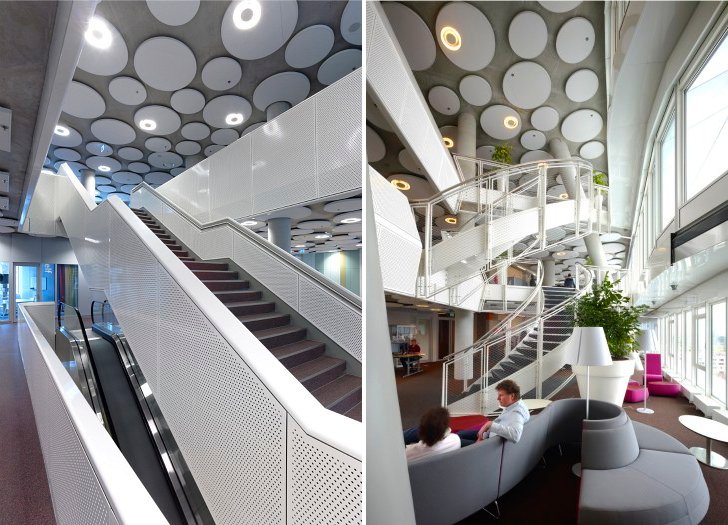
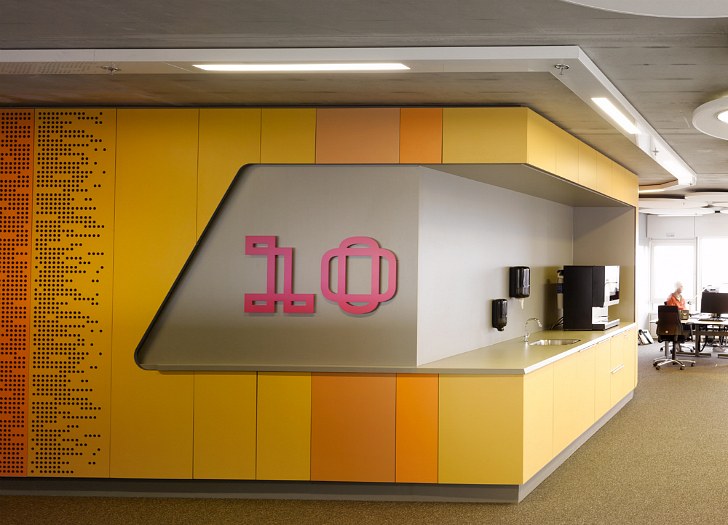

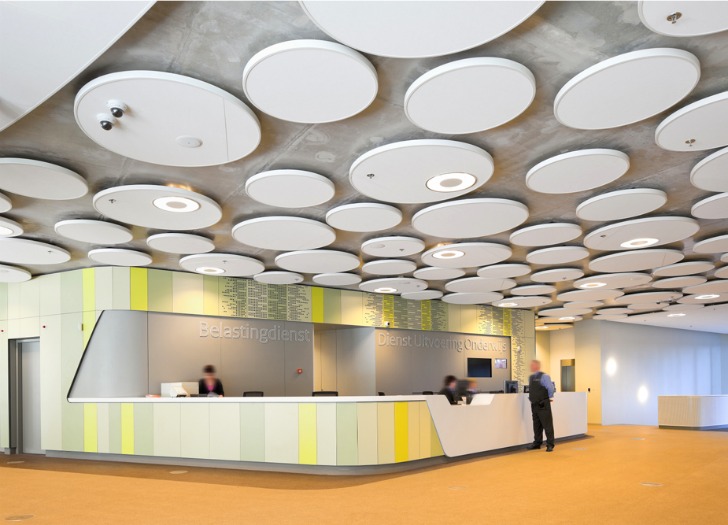
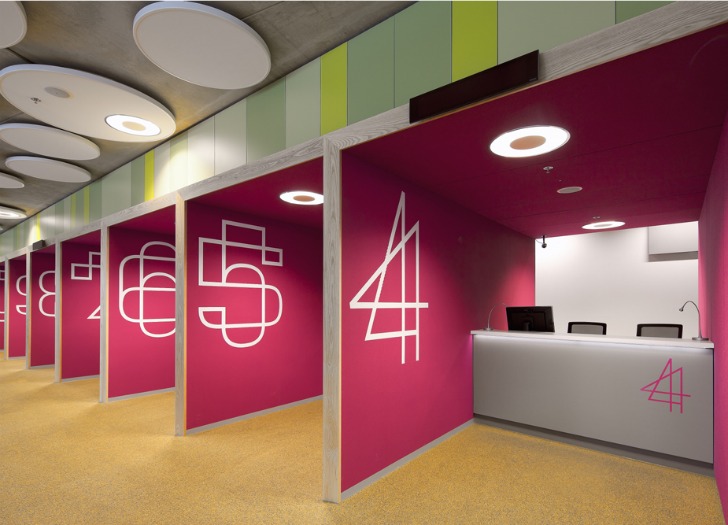
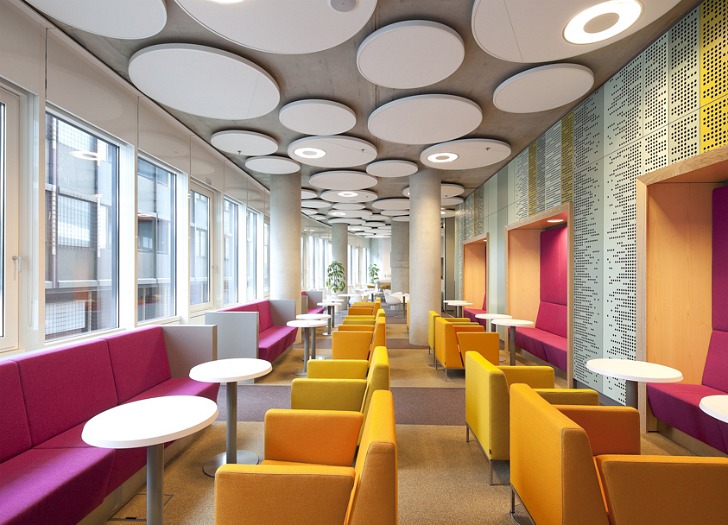
 EEA and Tax OfficesTouted as one of the most sustainable office buildings in Europe, the new EEA and Tax Offices in Groningen, The Netherlands, is clad in a series of organically-shaped white fins giving the building an accessible and friendlier facade. Recently completed, the governmental office complex was designed by <a href="http://www.unstudio.com/" target="_blank">UNStudio</a> with consortium DUO² for future flexibility and energy efficiency in mind. Daylighting, a <a href="http://inhabitat.com/a-playful-checkerboard-facade-protects-the-pegasus-building-from-the-indian-heat/">high performance facade</a>, natural ventilation, material conservation, flexibility and a healthy interior all add up to a fully integrated, intelligent design approach towards sustainability.1
 EEA and Tax OfficesThe 92 meter complex is composed of soft undulating, white curved facade and houses the national tax offices and the student loan administration.2
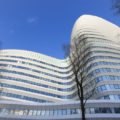 EEA and Tax OfficesDesigned to accommodate 2,500 workstations, the asymmetric building features parking facilities for 1,500 bicycles and an underground parking garage for 675 cars.3
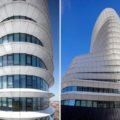 EEA and Tax OfficesSituated in a woodland, the site also shelters rare and protected species and eventually will be surrounded by a large public city garden with a pond and a multifunctional pavilion.4
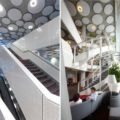 EEA and Tax OfficesThe design team, which also includes Lodewijk Baljon for the landscape design, Arup for the engineering and Studio Linse as the interior adviser, were tasked to create a long term platform for sustainability that includes reduced maintenance, energy efficiency, material resource conservation, long term flexibility, and reduced impact on its surroundings.5
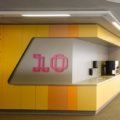 EEA and Tax OfficesThe floor heights were reduced from 3.6 meters to 3.3 meters, bringing the total height of the building down by 7.5 meters, which lowers the building's profile and reduces construction materials.6
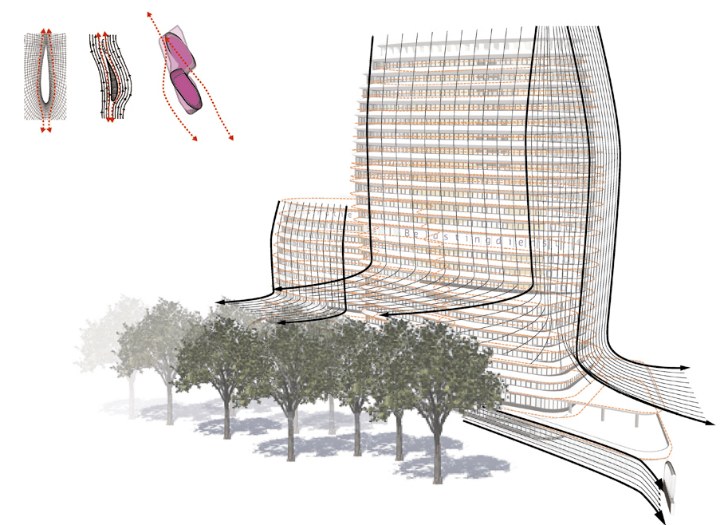
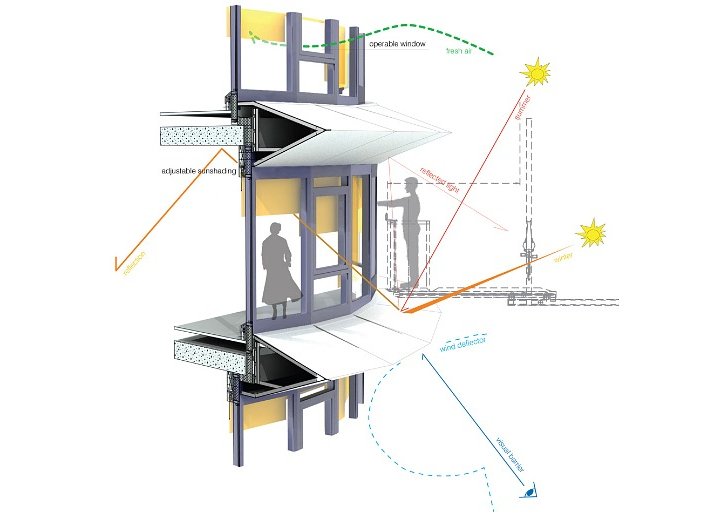
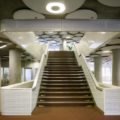 EEA and Tax OfficesA core feature of the building's energy efficiency strategy is the white-finned facade, which works to improve daylighting, provide solar shading and control wind.7
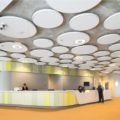 EEA and Tax OfficesThe horizontal fins also diffuse the sun's heat and reduce the need for cooling. A concrete core with underground long term storage also reduces the need for external energy sources.8
 EEA and Tax OfficesNatural ventilation and individual climate control for each work station helps maintain a healthy indoor environment.9
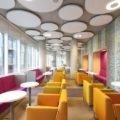 EEA and Tax OfficesFinally, the building was designed for the future so that the flexible interior could be transformed into residences or so the residual heat energy of the data center and offices could be used to heat nearby homes.10
 EEA and Tax OfficesAir flow analysis on the facade.11
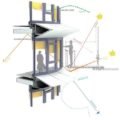 EEA and Tax OfficesDaylighting analysis on the facade.12

