


Start Slideshow


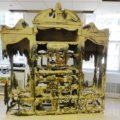 Valerie Hegarty<a href="http://valeriehegarty.com" target="_blank">Valerie Hegarty</a>’s haunting works artfully combine <a href="http://inhabitat.com/nyc/inhabitats-awesome-eco-art-picks-from-the-scope-new-york-art-fair/" target="_blank">recycled materials</a>, found objects, and tree branches. The New York City-based artist's work transcends traditional painting, instead appearing as if the pieces are relics from a long lost sunken ship or demolished historic estate. Last month, the <a href="http://www.lmcc.net/" target="_blank">Lower Manhattan Cultural Council</a> opened its doors, inviting guests in to take a peek around the studios of their artists in residence, and Inhabitat was on hand to check out some new examples of Hegarty's amazing work.1
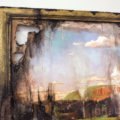 Valerie HegartyHegarty’s art work is a little disorienting at first. When approaching a piece, they first appear to be extremely damaged historical artifacts, that have been overtaken by nature or <a href="http://inhabitat.com/nyc/local-farmers-face-pumpkin-shortage-because-of-hurricane-irene/" target="_blank">natural disaster</a>. Upon closer inspection, we can see that this “damage” is Hegarty’s expert ability create the look of singed canvas, waterlogged wood, or overgrown foliage.2
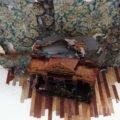 Valerie HegartyNew Yorkers could see an example of her style of depicting branches growing through a canvas, with her piece “Autumn on the Hudson Valley with Branches,” that hangs outside on a fence on the <a href="http://inhabitat.com/nyc/designs-unveiled-for-the-final-section-of-the-high-line/" target="_blank">High Line Park</a>. Set within the lush backdrop of the <a href="http://inhabitat.com/nyc/inside-the-subterranean-essex-street-trolley-terminal-the-proposed-space-for-the-low-line/" target="_blank">High Line</a>, the branches emerging through the shredded canvas seems like a beautiful accident, harmonizing with the park.3
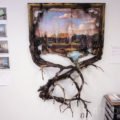 Valerie HegartyHegarty's new pieces also continue this process, using <a href="http://inhabitat.com/craig-folds-five-manipulates-money-into-amazing-origami-art/" target="_blank">recycled materials</a>. Entitled “West Rock with Branches,” a large landscape painting greets visitors as they enter her studio. As if to return to the earth, the frame of the painting morph seamlessly into twisted tree branches that coil around each other below the painting, as if the landscape were a living, growing being.4
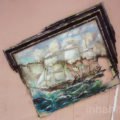 Valerie HegartyTwo of her new pieces have a nautical theme, using techniques to emulate <a href="http://inhabitat.com/nyc/architecture-students-propose-an-elaborate-lattice-work-bib-to-protect-manhattan-from-rising-sea-levels/" target="_blank">water damage</a>. The frame of a painting of big sailed ships deteriorates before our eyes, the painting slashed much like the damage sails endure on the high seas.5
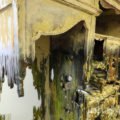
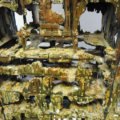 Valerie HegartyMore impressively, the artist has transformed a massive disused wooden wardrobe into a detailed relic that appears to have spent many years on the <a href="http://inhabitat.com/“silent-evolution”-builds-a-beautiful-coral-reef-from-statues/" target="_blank">ocean’s floor</a>. Faux barnacles and decay adorn the piece, enlivening our imaginations of the decadent ship that once held the armoire.6
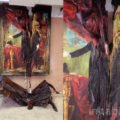 Valerie HegartyIn the center of the room is perhaps the most striking piece, comprised of a painting hung over a vintage <a href="http://inhabitat.com/the-rek-modular-table-transforms-to-fit-any-interior/" target="_blank">coffee table</a>.7
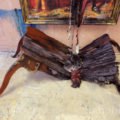 Valerie HegartyAs if caught in a massive, melting fire, the painting is singed almost in two, dripping onto the table below which has also been split and melted. The piece is at once powerful, but also inspires an incredible possibility of narratives.8
 Valerie HegartyValerie Hegarty has the fantastical ability to create artistic beauty in the form of decay. Her unique works are gorgeous, but also evoke history, tragedy and wonder, leaving the viewer much to ponder.9
