


Start Slideshow


 CougarThere are <a href="https://en.wikipedia.org/wiki/Eastern_cougar">mountain lions</a> in the Blue Ridge Mountains of the eastern United States, but wildlife officials still call them <a href="https://www.fws.gov/news/ShowNews.cfm?ID=FCA80842-063F-1657-BC5E7C57A4928F54">extinct</a> and haven’t done much to support their populations. Numerous sightings, videos, and DNA tests on captured animals point to the existence of a small population of the cats in Tennessee, where they were previously declared extinct. Despite evidence of their existence, mountain lion habitat is not officially protected, leading environmentalists to accuse wildlife officials of negligence that could further endanger the animals.1
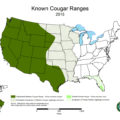 Cougar Population Range Map TNMountain lions once roamed the continent from west to east, but the spread of human communities have led to a massive reduction in the number of <a href="http://inhabitat.com/environment/animals/">big cat</a> populations in the east. In fact, the only recognized population of mountain lions east of the Mississippi River are southern Florida panthers and DNA testing has confirmed that population is not migrating north. Declining numbers of mountain lions over the past 100 years led wildlife officials in other Eastern states to declare them <a href="http://inhabitat.com/tag/extinct-animals/">extinct</a>. However, the growing number of sightings in Tennessee since September 2015 has environmentalists arguing that it’s time to reconsider the species’ status, and work to conserve their habitat to encourage further population increases. So far, wildlife officials do not seem eager to take action.2
 Bobcat<h1>Are they really mountain lions?</h1> A <a href="http://inhabitat.com/tag/mountain-lions/">mountain lion</a> is a wild cat ranging from two to three feet tall, with females weighing up to 120lbs and males up to 200lbs, making it the fourth largest cat in the world. They are also known as cougars, panthers, pumas, or catamounts—all are the same animal. While bobcats are considerably smaller (the largest among them are under 20lbs), their similar coloring can lead to cases of mistaken identity, especially from a great distance. What’s more, mountain lion kittens and young bobcats are very difficult to tell apart. Many reports of mountain lion sightings are immediately dismissed as a case of mistaken identity and some, like this <a href="http://www.citizen-times.com/story/news/local/2016/06/28/answer-man-dead-cougar-spotted--40/86460614/">alleged sighting of a dead mountain lion</a> on a highway cutting through North Carolina’s stretch of the Blue Ridge Mountains. Wildlife officials claim no knowledge of the carcass, but there are any number of alternate explanations, such as scavengers dragging it off the road or a passerby collecting it.3
 Map of TN cougar sightings<h1>The scientific evidence</h1> Tennessee wildlife officials admit cougars roam the mountains in that state, after the first cougar in 100 years was photographed there. Despite the mounting number of <a href="https://www.tn.gov/twra/article/cougars-in-tennessee">sightings, videos, and captures over the past year</a>, the state does not recognize the big cats as a permanent residents, because of the lack of evidence of reproducing females. A <a href="https://experts.umn.edu/en/publications/cougars-are-recolonizing-the-midwest-analysis-of-cougar-confirmat">study from University of Minnesota</a> reviewed 18 years of cougar sightings in an effort to understand the big cats’ activity. The study argues that the increased population in Tenn. suggests that cougars are expanding their Midwest territory in search of adequate habitat to reproduce. Some say the big cats could reestablish their populations in the Blue Ridge Mountains within 25 to 50 years.4
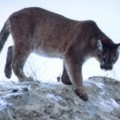 Mountain lion on rock<h1>Alleged mountain lion attack</h1> A man injured while hiking a section of the Appalachian Trail near Humpback Rock in Virginia was <a href="http://www.whsv.com/content/news/Mountain-lion-attack-reported-near-Humpback-Rock-385246261.html">initially reported as the victim of a mountain lion attack</a> on Jul. 1 of this year. At that time, the Virginia Department of Game and Inland Fisheries, suggested that was unlikely and issued a statement recalling that "since 1970, 121 sightings have been identified as possible mountain lions, but have not been officially confirmed. Most sightings occur in Shenandoah National Park and in Bedford, Amherst and Nelson County region." The victim’s mother, who had called 911 on his behalf, <a href="http://www.richmond.com/news/virginia/article_4b9ae7a5-7652-5c7a-a3df-066760c21da5.html">later revealed</a> that a miscommunication led her to identify the wrong animal. She said that her son was actually attacked by a bobcat, which he had referred to as a “big cat.” She made an assumption when she told the 911 operator it was a mountain lion. This clarifying piece of information fuels the doubt about the true resurgence of the eastern cougar.5
 Mountain lion kittens<h1>What’s next for the eastern cougar?</h1> Environmental conservation groups are working to urge wildlife officials to review the status of mountain lions across several states, including Tenn., KY, and VA, and little progress has been made. The federal Fish & Wildlife Service removed the eastern cougar from the Endangered Species List last year, and <a href="http://ecos.fws.gov/ecp0/profile/speciesProfile?spcode=A046">reclassified them as an extinct subspecies</a> after a four-year review. Prior to that decision, the Mountain Lion Foundation <a href="http://mountainlion.org/ActionAlerts/070816easterncougar/070816easterncougar.asp">sponsored a petition</a> to urge the opposite, suggesting FWS work to support the eastern cougar’s repopulation of the Blue Ridge Mountains instead. Just months after the federal agency declared the big cats extinct, the animals began appearing in the Tenn. mountains, leading to a renewed effort to protect the eastern cougar. MLF and other conservation groups argue that genetic testing proves all mountain lions are the same subspecies, so the FWS decision to declare them extinct in the Eastern states is not only irresponsible but unethical.6
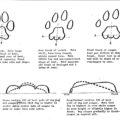 Dog vs Cougar tracksWill it take federal wildlife officials another four years to recognize that eastern cougars are trying to make a comeback in the Blue Ridge Mountains, or will their tracks once again fade into oblivion?7
 Cougar[gallery_extend]....<br><br><a href='https://inhabitat.com/wildlife-officials-deny-mountain-lions-are-back-in-the-blue-ridge-mountains/'>READ ARTICLE</a>8
