Here at Green Building 101, we’ve looked at many ways that you can design, build, and renovate your home with more attention to your health and the environment. Now that you’ve been thoroughly educated, we’re going to dig into the nitty gritty details about items that nearly all of us have in our homes, but rarely think about with regard to energy usage and green living. Get ready for glamour—today we’re talking about plug loads.


Ah, plug loads! Very exciting, you say… but what are they?! Let’s simplify. We’re talking about anything and everything that gets plugged in to an electrical outlet: major appliances, task lights, consumer electronics, home office products and a variety of miscellaneous tools and devices. Without even adding lighting, these electronics are responsible for nearly 50 percent of an average home’s electricity bill. Lighting commonly adds another 15-20 percent, space heating and cooling, cooking, and water heating make up the rest, and also comprise your natural gas bill. Let’s investigate the primary energy suckers.

Pay Up Front for Quality Appliances
Some call these “white goods”, but they come in all colors, and buying the right models can save you a lot in energy costs over time. Refrigerators, freezers, dishwashers, clothes washers and dryers, and stoves will cost you plenty to purchase and even more to operate, but manufacturers are bringing more efficient models to the market all the time, so choose wisely.
The easiest way to identify the most energy-efficient products is to look for the ENERGY STAR label. EPA continues to improve their product specifications to ensure that industry is staying aggressive with energy efficiency. Among major appliances, refrigerators, freezers, dishwashers and clothes washers are all labeled. Also look for “Energy Guide” tags, which show a model’s expected annual energy use and how that ranks against peer models.
ENERGY STAR-qualified washing machines will save both energy and water, but remember to use cold water as often as possible and only wash full loads of laundry. Clothes dryers are not labeled by ENERGY STAR because most models use about the same amount of electricity, but consider choosing a dryer with a moisture sensor so that it will shut off automatically when your clothes are dry.
Room air conditioners fly off the shelves in summer months: remember to choose the correct size and opt for a high SEER rating.
Related: Xeros Washing Machine Uses Polymer Beads Instead of Water

Next, Let’s Count Up Those TVs and Computers
Consumer electronics and home office products continue to dominate our homes as we try to satisfy our entertainment and networking interests. The Consumer Electronics Association estimates that the average home has more than 25 consumer electronics products, and many of these devices are left on 24 hours a day. We have evolved into an always-on, always-connected society, and CE products highlight this fascination. Remember that many devices continue to draw power even when they are “off.” ENERGY STAR has addressed this by requiring qualified products to use minimal energy while in stand-by mode. So look for the ENERGY STAR on televisions, DVD players, audio components, and telephony products.
Speaking of being connected, more of us work from home these days, and having a full cache of networked home office products—computer, monitor, printer, fax, scanner, Internet router—is not uncommon. Be sure to look for the ENERGY STAR and also remember to check the power management settings on your computer. Screen savers were okay for your Apple IIe, but we don’t need them anymore—they prevent the computer and monitor from going into a low-power sleep mode.
Products such as TVs and computers are attracting attention for their active power use as well. Large screen plasma TVs, for instance, use much more energy in active mode than older, smaller analog models. Screen size and display technology (CRT, plasma, LCD), and resolution (HD) are all key factors, so be sure to compare before you buy.
Related: Samsung Unveils Solar-Power, Zero-Energy Transparent TV

Tools, Toys, and Toasters
Our drive for connectivity also means smartphones and iPads, and that’s just the beginning of our many digital toys. These products use chargers called external power adapters, but the problem is that most of us leave these adapters plugged in even when we’re carrying our phones around town, and these little black boxes suck bits of energy all day and night. Some of these devices are being made to operate more efficiently and ENERGY STAR now labels the best.
There are also toys that we leave at home: better keep your XBox and Play Station in check—they use a lot of energy, too.
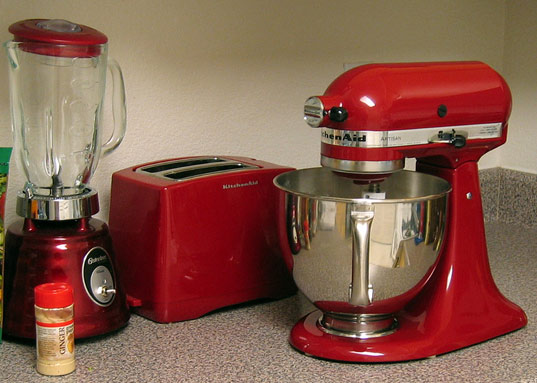
Lastly, be aware of all the small appliances and electric devices around your home, like humidifiers and dehumidifiers, toasters, coffee makers, microwaves, fans, hot tubs, pool heaters, air cleaners, battery chargers, and rechargeable tools, to name a few. Each of them might only use a small amount of electricity, but it all adds up. Unplug devices when possible and use power bars to make disconnecting easier.
Stay tuned as we wind down the Green Building 101 series next week!