


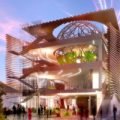





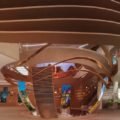

The designers created a modular system within the Azerbaijan pavilion so that various levels can be reconfigured to accommodate a variety of different uses. Each floor is connected via an escalator and includes installations that celebrate different aspects of Azerbaijan’s diverse culture, geography, and history. Biospheres, large globular structures made from glass and metal, intersect each of the floors and consist of different plantings or icons native to the country.
Related: Daniel Libeskind Unveils Twisting Vanke Shitang Pavilion for 2015 Milan Expo
In addition to mitigating solar heat gain, the slatted wood shell helps bring in natural light and cut down on energy consumption. To emphasize its organic nature, the designers used wavy and undulating lines wherever possible, from the wooden facade and planting beds to the lighting and interior furniture. Once the Expo ends, the pavilion will be dismantled and reconstructed in the Azerbaijani capital of Baku.
+ Simmetrico Network
+ Arassociati Architecture
+ AG&P
Via Dezeen
Images via Simmetrico Network


