


Start Slideshow


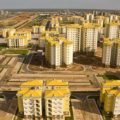 Kilamba, Angola ghost cityNova Cidade de Kilamba, Angola’s newly-completed massive ghost town, is the odd mixture of oil speculation, cheap money, and a seriously missed target for housing needs. The state-owned <a href="http://en.wikipedia.org/wiki/CITIC_Group">China International Trust and Investment Corporation</a> (CITIC) sank $3.5 billion dollars into a <a href="http://inhabitat.com/candy-colored-lollipop-house-is-a-swirling-energy-efficient-home-in-s-korea/">candy-colored </a>city of identical<a href="http://inhabitat.com/tour-bois-le-pretre-60s-parisian-social-housing-tower-renovated-into-gleaming-efficient-apartment-complex/"> midrise apartments</a> with enough housing units for 500,000 inhabitants. The problem is, few locals can afford one, and the monolithic development feels more like a prison camp than community.1
 Kilamba, Angola ghost cityKilamba is near Luanda, Angola’s capital, and it is mostly made up of a collection of 750 identical 5-, 8- and 11-story buildings.2
 Kilamba, Angola ghost cityTo help identify neighborhoods (we assume), entire blocks are painted in bright primary colors.3
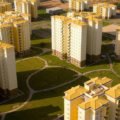 Kilamba, Angola ghost cityThe development stretches across 12,355 acres with lots of parking and green lawns almost completely devoid of actual residences.4
 Kilamba, Angola ghost cityThe <a href="http://www.bbc.co.uk/news/world-africa-18680217">BBC video </a>of the town shows a few workers watering lawns or walking on the sidewalk but not a single car in site.5
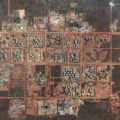 Kilamba, Angola ghost cityTen percent of the apartments are reportedly sold but at a starting price of $100,000, few people even in the relatively wealthy capital can afford them.6
 Kilamba, Angola ghost cityIt’s hard to see how the city will ever prosper due to the centrally-planned, rainbow-hued cluster bomb of buildings.7


