


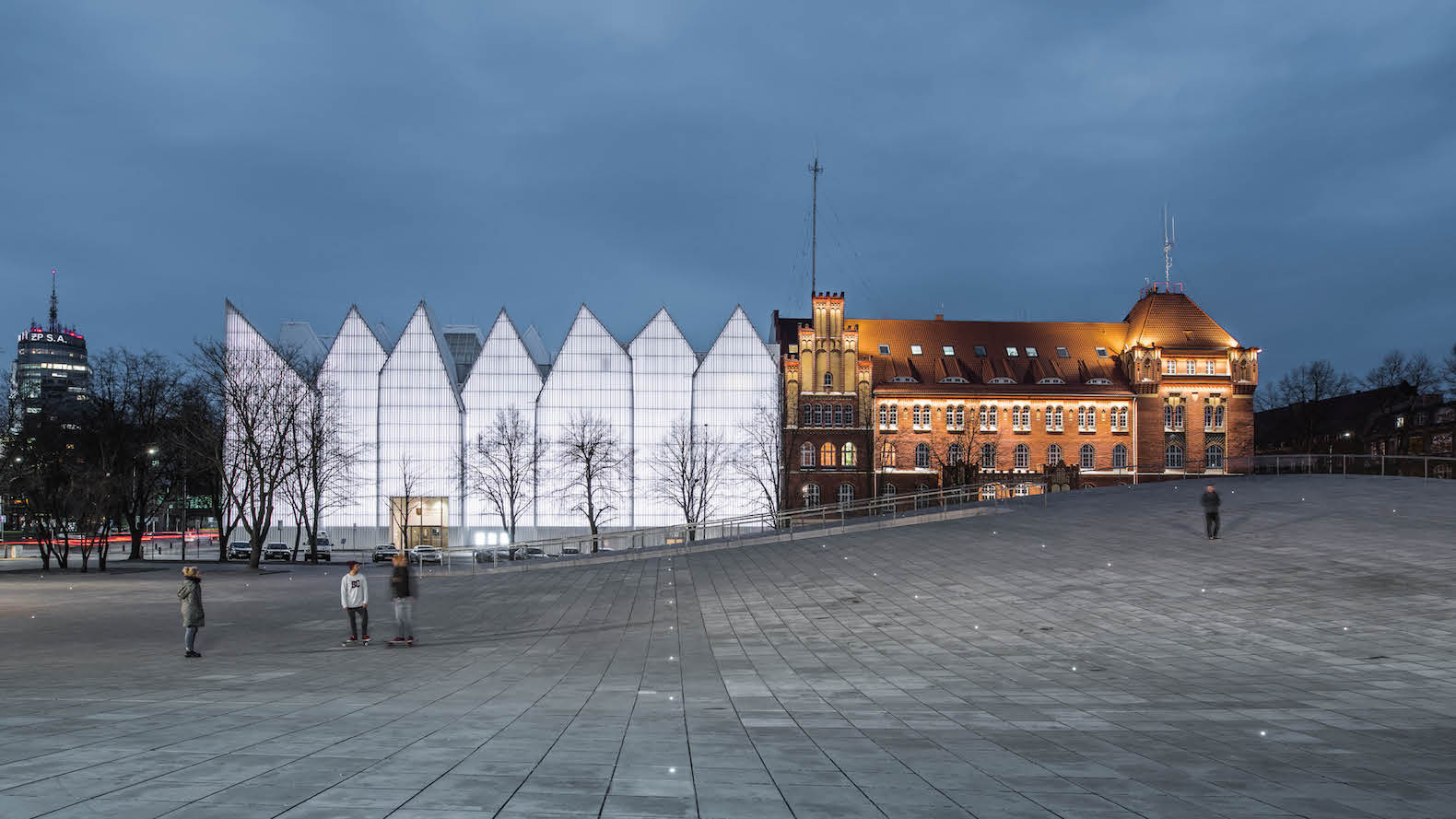
Hidden underground so as not to obstruct views of the neighboring Philharmonic Hall (the 2015 winner of the Mies van der Rohe Prize), the National Museum in Szczecin was built below an undulating public square, named Solidarnosc (Solidarity), a physical expression of the community’s response to the atrocities of the Second World War. The aboveground plaza that doubles as the museum roof is organized along an arced circulation path with a raised open amphitheater on one side and a softer, more rounded raised mound on the other. The raised surfaces hide entrances to the museum. The popular public space helps heal past wounds with play, dialogue, and community activities. The subterranean building was constructed from pre-cast concrete.
Related: These are the world’s best buildings
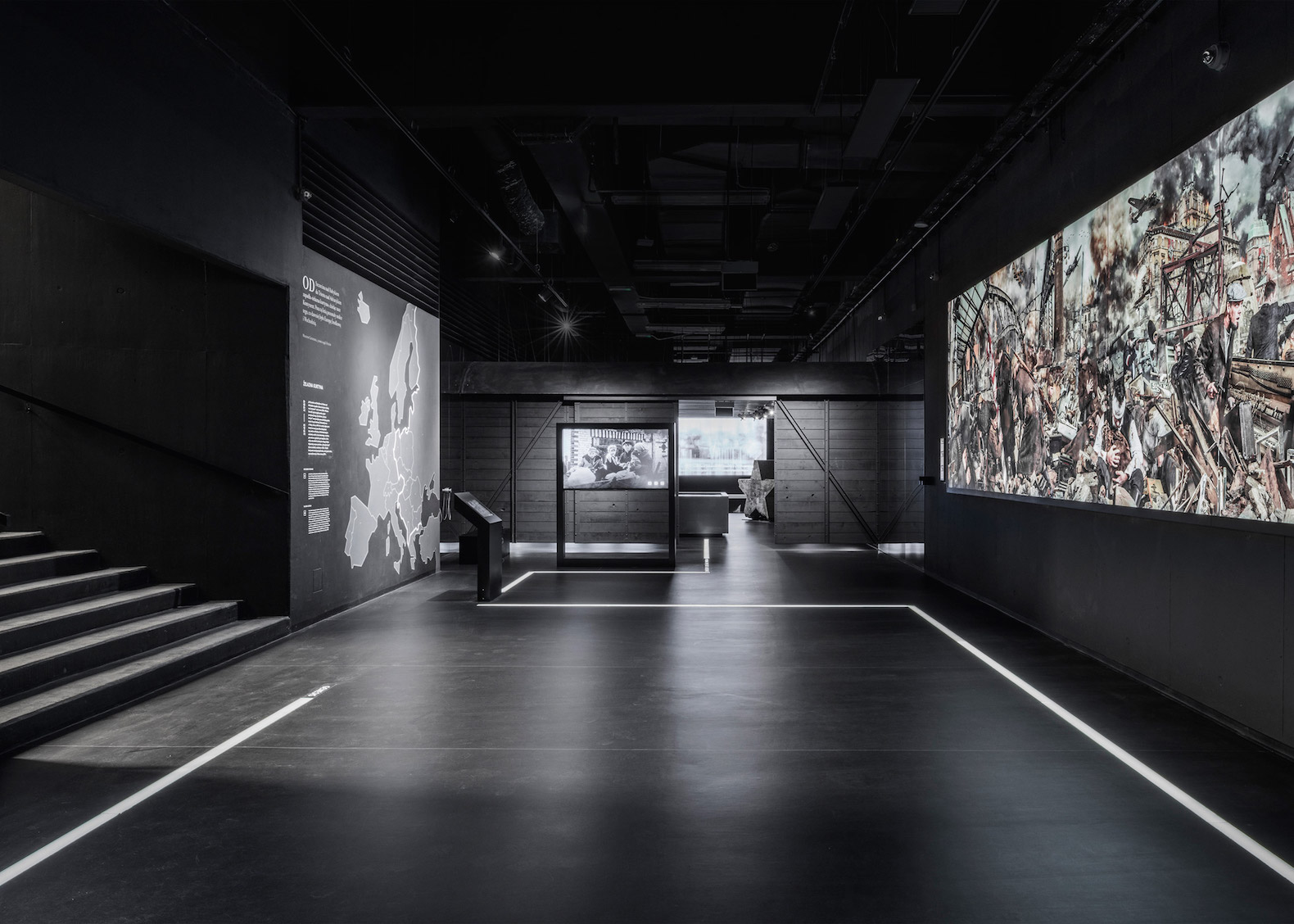
“This is a piece of topography as well as a museum,” said the WAF judging panel, led by architect David Chipperfield. “To go underground is to explore the memory and archaeology of the city, while above ground the public face of the building, including its undulating roof, and be interpreted and used in a variety of ways. This is a design which addresses the past in an optimistic, poetic and imaginative way.” The annual WAF awards are held to showcase the best architecture of the last 12 months.
Via Dezeen
Images via KWK Promes and WAF


