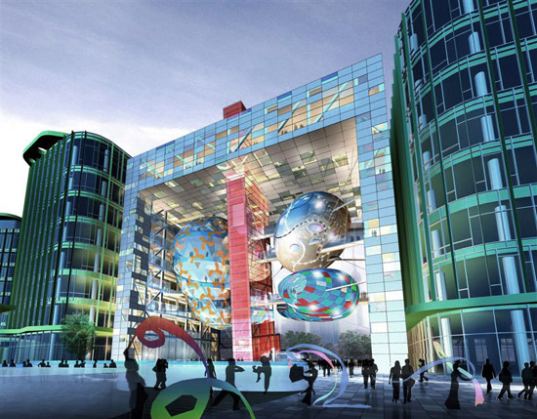
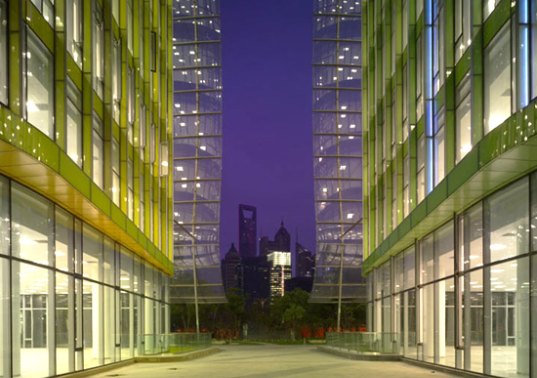
In preparation for the Shanghai 2010 World Expo Sparch Architects has designed this master plan for the International Cruise Terminal. The Terminal includes a cruise welcome center, office space, courtyards, as well as a green corridor along the Huangpu River. Arup Engineering is responsible for the energy efficient design of the welcome atrium, which includes an innovative river water cooling system, natural ventilation and photovoltaic cladding.
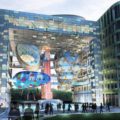

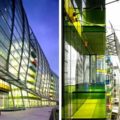

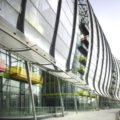


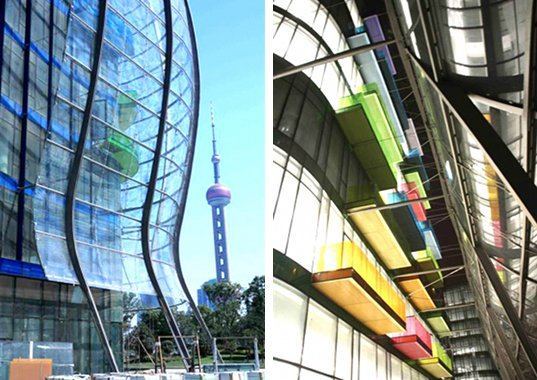
Most of the Cruise Terminal has already been constructed, and all that remains is to finish the Shanghai Chandeliers, a 40 meter tall glass clad portal, the centerpiece of the Cruise Terminal. One of the main focuses of the project was to provide urban open space for citizens and tourists to enjoy, including a pedestrian street, gardens, and festival space. The Cruise Terminal will be able to accommodate three large cruise ships and 1.5 million passengers per year. Most of the terminal facilities are placed underground to allow for more open space on the ground level as well as six office pavilions.
Engineering and sustainability for the office pavilions was designed by Arup Engineers and includes natural daylighting as well as ventilation routed through central atria with louvered skylights. A double skinned glass facade provides a barrier for the buildings, providing space for air to circulate in the summer to keep the buildings cool and then insulation in the winter. Cooling is also aided by an innovative river cooling system, which uses cool water from the Huangpu River. Additionally canopies on the office roofs is covered in a photovoltaic membrane sized to provide enough energy for the outdoor lighting and public spaces.
+ Sparch
Via Designboom