


Start Slideshow


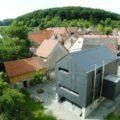 Haus KohlerThe Haus Köhler, designed by architect <a href="http://www.ueber-bau.de/projekte/wohnungsbau/koehler/koehler.htm">Bruno Blesch</a>, is a <a href="http://inhabitat.com/modern-dutch-thatch-house-links-with-the-past/">hybrid of the old and new</a>, where an old German farmhouse has been transformed into an energy-efficient family home. The re-design of the new home maintains its classic profile, but to meet a modern aesthetic, the architect gave the structure a contemporary twist topped off with sustainable sensibilities. Featuring a hardy slate skin and a passive solar design, this this small farmhouse in the small village Uiffingen will provide for a perfect home that will live far into the future.1
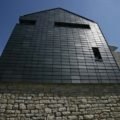 Haus KohlerThe house is part of a small abandoned farm in the middle of the village. The original building was <a href="http://inhabitat.com/ho-hum-post-war-house-transformed-into-a-sanctuary-of-modernest-bliss/">demolished</a> down to its stone wall walk-out basement, which was then stabilized for the new house.2
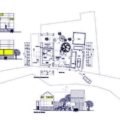 Haus KohlerUsing the exact same profile of the original, the new 118 square meter home fits right into the rural neighborhood with only a few cues to its modern pedigree.3
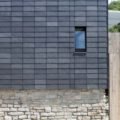
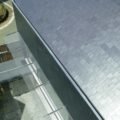 Haus KohlerThe slate walls and roof echo classic materials, but applied in a fresh new way, wrapping the home in a protective, long lasting shell.4
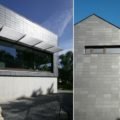 Haus KohlerA few elongated windows peak through the façade facing the street. The south side is<a href="http://inhabitat.com/hof-house-by-studio-granada-architects/"> heavily glazed</a> at the lower level to allow full winter sun to light and heat the interior’s tiled floor and concrete walls.5
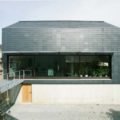 Haus KohlerThe windows are also aggressively shaded to reduce summer heating.6
 Haus KohlerSupplemental heating is provided by a <a href="http://en.wikipedia.org/wiki/Pellet_stove">wood pellet heater</a>.7
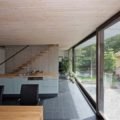 Haus KohlerThe interior is unabashed modern, with raw concrete walls, an open floor plan and some nice design touches.8
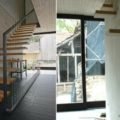 Haus KohlerPerhaps the most unique feature is a shelving system built into the wall reflecting the stairway design, only the wooden shelves tuck in when not needed.9
