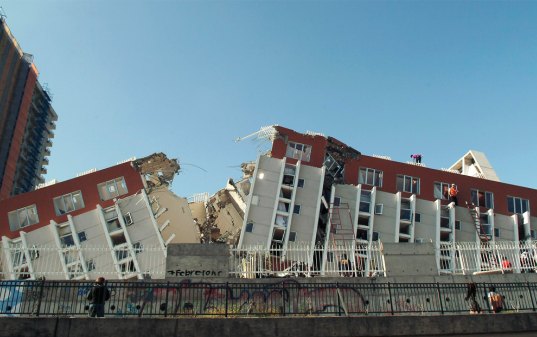
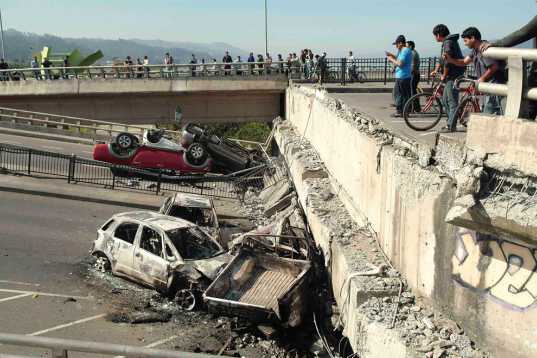
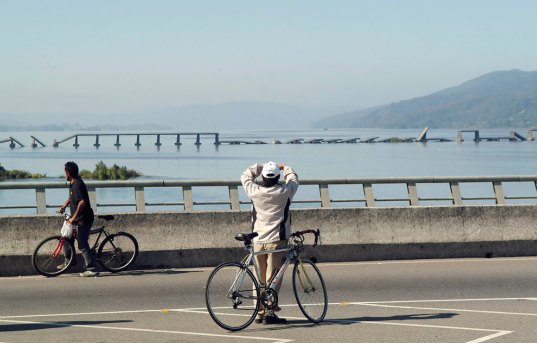
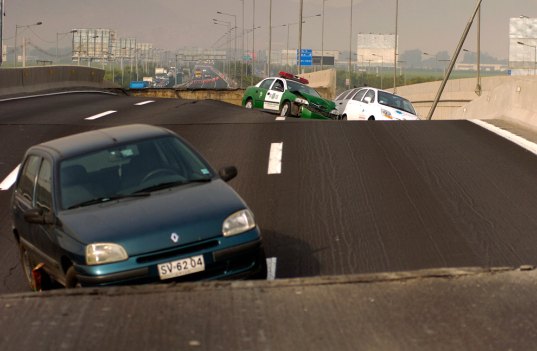
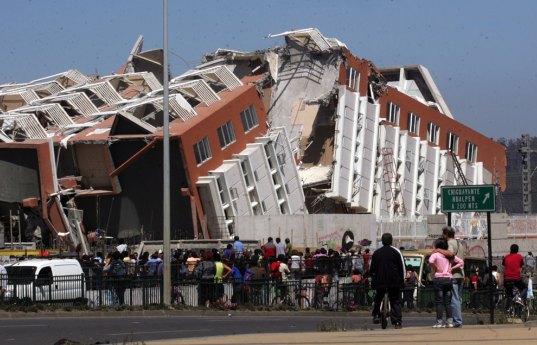
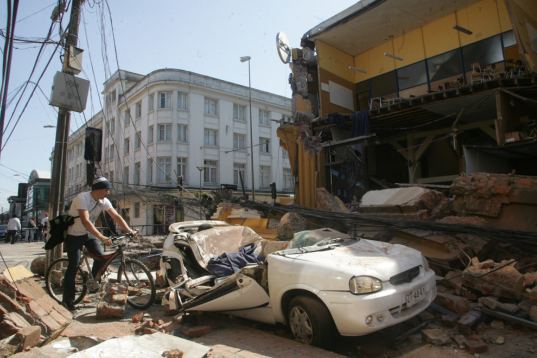
This past Saturday, the world awoke to yet another horrific natural disaster, an8.8 magnitude earthquake right off the coast of Chile near Concepcion. It’s only been 2 days since the deadly quake and the death toll has already risen to over 700. However in comparison, the Haiti earthquake (which measured 7.0 on the Richter scale) was 500 times less powerful than the one last Saturday but over 250,000 people were killed. Based on magnitude alone, the death toll from Chile should be much higher and the devastation much more complete – but that’s not the case. Chile can thank foresight and smart planning for that, and its situation is a testament to what a huge life-or-death difference smart building codes and well designed architecture can make.


Chile has been decimated by earthquakes before. In fact, the most powerful earthquake ever recorded was a 9.5 in 1960 in close proximity to the epicenter of Saturday’s quake. Since Chile has seen its fair share of earthquakes it has worked hard to prepare and protect against others. The country’s building codes, are recognized as some of the best in the world, and the country has implemented many quake-resistant building techniques to stem future disasters. Since the 1960’s, seismic codes have been enforced for all new construction based on what they call the “strong columns weak beam” system. As BBC describes it:
“The idea is that buildings are held up by reinforced concrete columns, which are strengthened by a steel frame. Reinforced concrete beams are joined onto the columns to make floors and the roof. If there is an earthquake, the idea is that the concrete on the beams should break near the end, which dissipates a lot of the energy of the earthquake, but that the steel reinforcement should survive and the columns should stay standing, which means the building will stay upright.”
 Photo by REUTERS/Marco Fredes
Our good friend over at ArchDaily and Platforma Arquitectura, David Basulto, has been reporting live from his home in Chile, and he says, “The country was seriously affected, especially in the southern part… several old buildings collapsed, and even new buildings collapsed. It could have been way worse, if compared to Haiti… This was due to the country’s seismic design code, recognized as one of the best in the world.” Of course buildings were destroyed, roads and bridges did collapse, and lives were lost, but it could have been so much worse.
Haiti, unfortunately, was not prepared for a 7.0 earthquake. Their poverty, lack of earthquake-resistant architecture, and inability to enforce what seismic code they had led to the mass destruction of property and life that occurred. The point really is that preparedness through planning, creation of adequate building codes, designing for disaster and enforcement of those codes makes an incredibly significant impact. Our hearts go out to the people of Chile and Haiti and their loss, but we are encouraged that quality architecture and infrastructure can actually save lives.
Pictures found at The Big Picture
*Author’s Note: Having spent three weeks this last December touring Chile, I saw some of the area that was destroyed. My husband and I were exceedingly impressed by the architecture, their efficient bus transportation, the speedy metro system in Santiago, and their overall progressiveness. The loss and devastation is tragic for the wonderful people of Chile. Our hearts go out to you. It is also exceedingly ironic that while the tsunami was speeding across the Pacific Ocean, we were on a flight to the big island of Hawaii, for what we didn’t know awaited us. Congrats to Hawaii for being prepared and ready for an event that thankfully didn’t occur.